(HINDI) Upcoming Inner Work Program | 6 Sep 2020 | Jnana Param
Jnana Param is a Spiritual Teacher, Twin Flames Coach and Kundalini Yoga practitioner. About Jnana Param

Teaching Gentle Inner Work for Twin Flame Healing & Alignment, Since 2016
Jnana Param is a Spiritual Teacher, Twin Flames Coach and Kundalini Yoga practitioner. About Jnana Param


Masculine Belief Clearing
Links:
———-
Become a member of this channel for exclusive benefits:
https://www.youtube.com/channel/UCnMeyJtQfjiOh4xVrmtm6Lw/join
Facebook Group:
https://www.facebook.com/groups/UrbanYogisJigyasu/
ONLINE TWIN FLAME INNER WORK PROGRAM :
Link to Complete Series on Twin Flame Journey in Hindi:
Link to Complete Series on Twin Flame Journey in English:
Link to Complete Series on Inner Work in Hindi:
#TwinFlamesCoach #TwinFlamesUnion #TwinFlames
Jnana Param is a Spiritual Teacher, Twin Flames Coach and Kundalini Yoga practitioner. About Jnana Param

Guided meditation to let go of past lovers is a healing meditation to perform forgiveness with past lovers of both you and your twin flame.
Healing Meditation starts at 15:50
Get more free tools below.
You and your twin flame have past lovers.
Till the time the energy of Past relationships or past lovers is intermingled with you or your twin flame’s energy, you and your Twin flame cannot be in harmonious union, as there is outside energy involved.
This outside energy is generally referred to as a third-party situation.
Mixing energy with outsiders means you or your twin are either physically, mentally, or emotionally dependent on them.
Now there are two ways to deal with these Past relationships or past lovers who appear from time to time in your or your twin flame’s life.
A longer way is to start a relationship with them i.e. to live with them for some time and when all Karmas associated with them get cleared then you get free from them.
A shorter way is that you use Guided meditation to let go of past lovers.
So let’s say you use Guided meditation to let go and clear your Past relationships or past lovers’ connections today.
In case your twin flame is married or they have a girlfriend or you are married or you are in a relationship, then clearing Past relationships or past lovers’ connections doesn’t mean that all these relations will end up instantly.
What will happen now is the equation of your present relations will start to change.
It’s like now relationship with your partner will become like Friends and the same will happen with your Twin flame regarding his Past relationships or past lovers.
This doesn’t mean you use Guided meditation to let go of past lovers today and everything will change today.
The level of healing depends on your spiritual growth.
If you are on the beginning level then only those Past relationships or past lovers, who match your current energy frequency till today, will get cleared.
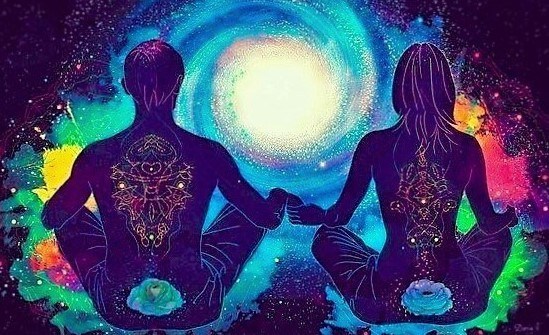
We teach some kriyas to our students in Basic Inner Work Program.
By practicing these, your spiritual and energetic system will grow and open up, and thus deeper Past relationships or past lovers will come to the surface i.e. new people will start to appear in your life as you are growing spiritually. E.g.
Now you have a choice whether you clear this connection or get involved in a romantic relationship with them.
If you clear these Past relationships or past lovers then you move ahead closer to union with your twin flame.
If you choose to get into a relationship with any of these past lovers then it will delay your harmony & union with your twin flame.
Subtitles: Except for Healing session videos, all remaining videos in the Hindi language have English subtitles.
Comments: If you have a question or comment then leave them in the comment section of the corresponding video on YouTube and we will answer it there.


Jnana Param is a Spiritual Teacher, Twin Flames Coach and Kundalini Yoga practitioner. About Jnana Param

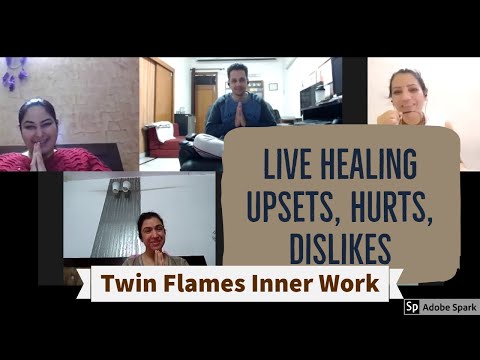
A Healing Session to heal Upsets Hurts Dislikes.
We try to go into depth and heal these emotions.
Meditation starts at 7:00
Links:
———-
Facebook Group:
https://www.facebook.com/groups/UrbanYogisJigyasu/
ONLINE TWIN FLAME INNER WORK PROGRAM :
Link to Complete Series on Twin Flame Journey in Hindi:
Link to Complete Series on Twin Flame Journey in English:
Link to Complete Series on Inner Work in Hindi:
#TwinFlamesCoach #TwinFlamesUnion #TwinFlames
Jnana Param is a Spiritual Teacher, Twin Flames Coach and Kundalini Yoga practitioner. About Jnana Param


19:00 – Full Moon Healing Meditation start
A powerful but simple meditation to cleanse your energy.
It can be used daily to release heaviness and negativity.
Links:
———-
Facebook Group:
https://www.facebook.com/groups/UrbanYogisJigyasu/
ONLINE TWIN FLAME INNER WORK PROGRAM :
Link to Complete Series on Twin Flame Journey in Hindi:
Link to Complete Series on Twin Flame Journey in English:
Link to Complete Series on Inner Work in Hindi:
#TwinFlamesCoach #TwinFlamesUnion #TwinFlames
Jnana Param is a Spiritual Teacher, Twin Flames Coach and Kundalini Yoga practitioner. About Jnana Param
Going Live for first time Join me to get answers to your questions. Links: ———- Facebook Group: https://www.facebook.com/groups/UrbanYogisJigyasu/ TWIN FLAME UNION PROGRAM – ONLINE to Learn Inner Work and Energy Clearing: Online Twin Flame Inner Work Program Link to Complete Series on Twin Flame Journey in Hindi: Link to Complete Series on Twin Flame Journey … Read more

When we talk about inner work, most people think that inner work is like doing meditation. Understand this that only meditation is not enough on this journey. Meditation is one part of inner work, but there are other tools and techniques that will supplement meditation.
Inner work is a combination of meditation, energy clearing and other such tools & techniques. This journey demands a constant touch of a teacher or guide who can guide us through all the difficulties of our journey. Preferably someone, who had already walked on this path and had figured out one of the shortest route to our desired destination.
———
Links:
Facebook Group:
https://www.facebook.com/groups/UrbanYogisJigyasu/
TWIN FLAME UNION PROGRAM – ONLINE to Learn Inner Work and Energy Clearing:
Link to Complete Series on Inner Work in Hindi:
Link to Complete Series on Twin Flame Journey in Hindi:
#TwinFlamesCoach #TwinFlamesUnion #TwinFlames
Jnana Param is a Spiritual Teacher, Twin Flames Coach and Kundalini Yoga practitioner. About Jnana Param


When we talk about inner work, most people think that inner work is like doing meditation. Understand this that only meditation is not enough on this journey. Meditation is one part of inner work, but there are other tools and techniques that will supplement meditation.
Inner work is a combination of meditation, energy clearing and other such tools & techniques. This journey demands a constant touch of a teacher or guide who can guide us through all the difficulties of our journey. Preferably someone, who had already walked on this path and had figured out one of the shortest route to our desired destination.
———
Links:
Facebook Group:
https://www.facebook.com/groups/UrbanYogisJigyasu/
TWIN FLAME UNION PROGRAM – ONLINE to Learn Inner Work and Energy Clearing:
#TwinFlamesCoach #TwinFlamesUnion #TwinFlames
Jnana Param is a Spiritual Teacher, Twin Flames Coach and Kundalini Yoga practitioner. About Jnana Param
In this post, we will talk about the Stages of meditation.
Is it sitting quietly with eyes closed called meditation?
Is focusing on a single object called meditation?
Meditation or inner work is a very commonly used word these days.
Let’s understand what are the Stages of meditation.
Meditation is another name for Dhayana.
In our day-to-day life, when we do some carelessness, then our father or mother or others will say Be focused(“Dhayan se Karo”), or Where is your focus(“Dhayan Kaha hai tuhara”) or You are not focusing(“Dhayan nahi de reha”).
So what is this Dhayan that people are referring to?
What is the way to give more Dhayana?
Are Meditation and Dhayan the same?

Let’s get to know what Sage Patanjali wrote in ‘Patanjali yoga sutra’ about the Stages of meditation.
Sage Patanjali documented everything about yoga in a document named “Patanjali yoga sutra”.
‘Patanjali yoga sutra’ says that yoga has eight steps and thus yoga is known as Ashtanga yoga.
These eight steps are Yama, Niyama, Asana, Pranayama, Pratyahara, Dharana, Dhyana, Samadhi.
As we can see that in yoga, Dhayan or meditation is mentioned as the 7th step.
Do you think it is worth to know that, what are the six steps that come before Meditation?
Do you think it is worth knowing that what we are practicing is really meditation or is it some kind of hallucination?
Do you think it is worth to know that how much time should we spend in meditation daily so that we also maintain a balance with the outside world to do our daily tasks, and activities, and between our spiritual life?
If yes then let’s first discuss briefly the eight steps of Ashtang yoga.
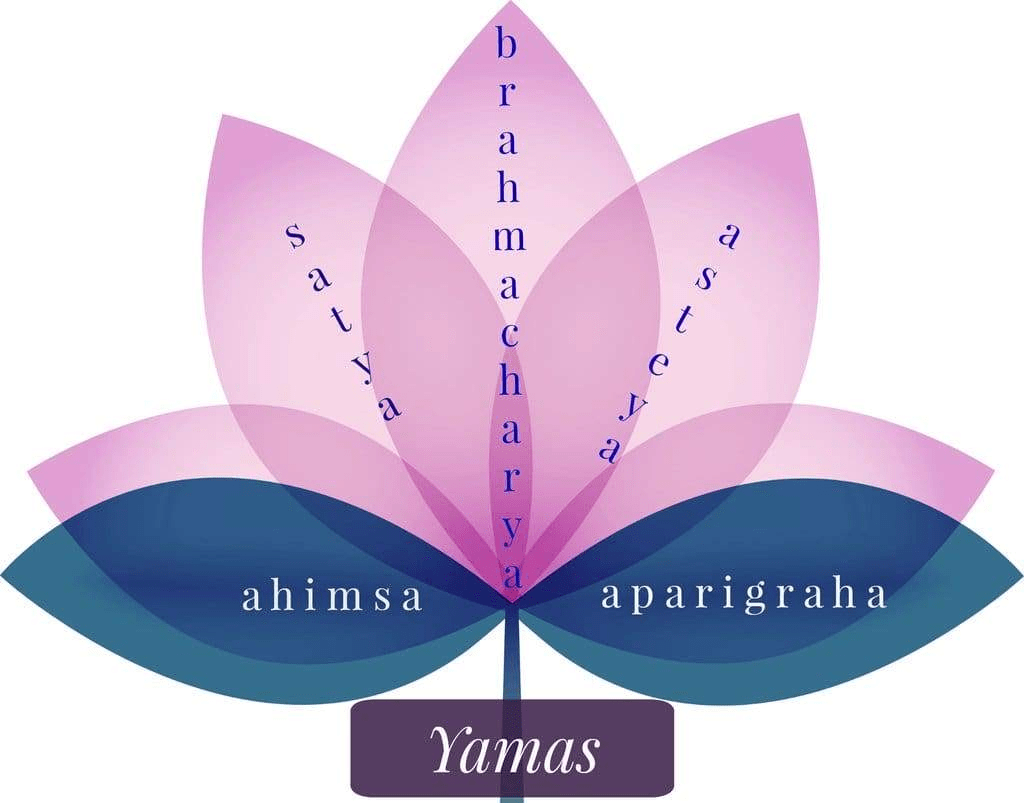
The first in the Stages of meditation is Yama, which deals with one’s ethical standards and sense of integrity, focusing on our behavior and how we conduct ourselves in life. The five Yamas are:
Don’t worry, we will not ask you to follow Yama.
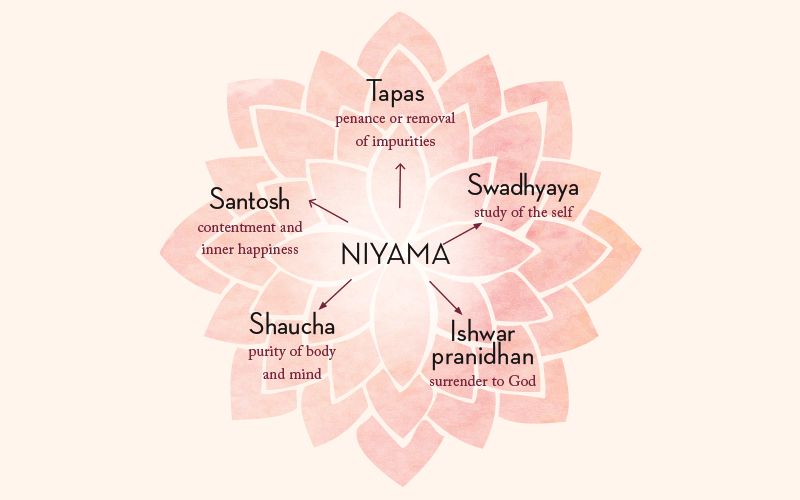
Next in the Stages of meditation is Niyama, which deals with self-discipline and spiritual observance.
The five Niyamas are:
Don’t worry, We will also not ask you to follow Niyama.

Next in the Stages of meditation is Asana, which is the posture practiced in yoga.
In the yogic view, the body is a temple of spirit, the care of which is an important stage of our spiritual growth.
Through the practice of asanas, we develop the habit of discipline and the ability to concentrate,
both of which are necessary for meditation.
Many people who contact us have a similar problem in their life that they can not continue to follow anything for longer periods with dedication and consistency.
This 3rd step of Ashtang yoga i.e. Asana is required to follow by you.
We will only ask you to do 5 to 10 mins of asanas.

Next in the Stages of meditation is Pranayama, which is generally translated as breath control.
This fourth stage consists of techniques designed to gain mastery over the respiratory process while recognizing the connection between the breath, the mind, and the emotions.
Initially, the major focus is on Pranayama to build your breathing capacity. Then gradually its duration is decreased.
These first four Stages of meditation of Patanjali’s ashtanga yoga concentrate on refining our personalities, gaining mastery over the body, and developing an energetic awareness of ourselves, all of which prepare us for the second half of this journey, which deals with the senses, the mind, and attaining a higher state of consciousness.
Next in the Stages of meditation is Pratyahara, which means withdrawal or sensory transcendence.
It is during this stage that we make the conscious effort to draw our awareness away from the external world and outside stimuli.
Keenly aware of, yet cultivating a detachment from, our senses, we direct our attention internally.
The practice of pratyahara provides us with an opportunity to step back and take a look at ourselves.
This withdrawal allows us to objectively observe our cravings: habits that are perhaps detrimental to our physical, mental, and emotional health and which likely interfere with our inner growth.
Note: This is the major part that we teach.
As each stage prepares us for the next, the practice of pratyahara creates the setting for Dharana or concentration.
Having relieved ourselves of outside distractions, we can now deal with the distractions of the mind itself.
No easy task! In the practice of concentration, which precedes meditation, we learn how to slow down the thinking process by concentrating on a single mental object: a specific energetic center in the body, an image of a deity, or the silent repetition of a sound.
We, of course, have already begun to develop our powers of concentration in the previous three stages of posture, breath control, and withdrawal of the senses.
In asana and pranayama, although we pay attention to our actions, our attention travels.
Our focus constantly shifts as we fine-tune the many nuances of any particular posture or breathing technique.
In pratyahara we become self-observant; now, in Dharana, we focus our attention on a single point.
Extended periods of concentration naturally lead to meditation.
Meditation(Dhyana), the seventh stage, is the uninterrupted flow of concentration.
Although concentration (Dharana) and meditation (dhyana) may appear to be one and the same, a fine line of distinction exists between these two stages.
Where Dharana practices one-pointed attention, dhyana is ultimately a state of being keenly aware without focus.
At this stage, the mind has been quieted, and in the stillness, it produces few or no thoughts at all.
The strength and stamina it takes to reach this state of stillness are quite impressive. But don’t give up.
While this may seem difficult, it is not an impossible task, remember that yoga is a process.
Even if we are unable to reach Dhyana, still know that every stage of Ashtang yoga has its own benefits.
We would like to add here “Koi Mai ka laal aapko Dhayan karna nahi sikha sakta, Dhayan khud ghatit hota hai” i.e. No one can teach you how to meditate, meditation happens on its own. A teacher can only teach you steps to meditation.
The less we talk about it the better.
Patanjali describes this eighth and final stage of ashtanga, samadhi, as a state of ecstasy.
We will not talk much about this stage yet as this is out of the scope of this post.
When you will reach this stage, you will know.
So all we want to say is that if you are already doing meditation then understand what you are currently following in your meditation practices.
And make sure that you are not missing any intermediate steps that lead to meditation. Otherwise, it could just be a confusing journey for you.
If you are being guided by a teacher or a guru, get to know more about what stage are you following.
If you are doing it without any teacher, just by following YouTube, then maybe it will be better to find a teacher who can make the process more efficient.
Jnana Param is a Spiritual Teacher, Twin Flames Coach and Kundalini Yoga practitioner. About Jnana Param


