Why Letting Go of Past Relationships Matters on the Twin Flame Journey

Letting Go of Past Relationships

Letting Go of Past Relationships on the Twin Flame Journey

Have you ever tried to move forward into a new relationship while still emotionally connected to someone from your past?

You may be talking to someone new. You may even believe that you have moved on.

But at the same time, you may still occasionally message your ex, check in on their emotional wellbeing, offer them support, revisit old memories, or maintain a connection that feels more emotional than practical.

At first, this can seem harmless.

You might think:

“We’re just talking.”

“There’s nothing romantic between us anymore.”

“We’re simply staying in touch.”

But sometimes, even when nothing obviously romantic is happening, an old emotional connection can continue occupying space within us.

And when we are trying to build something new, that can create confusion, emotional disturbance, and divided attention.

This is why letting go of past relationships can become an important part of emotional healing and moving forward.

Why You Must Release the Past on Twin Flame Journey to Move Forward

Why Is Letting Go of Past Relationships So Difficult?

A past relationship isn’t simply another person we once knew.

A significant relationship can contain years of memories, emotional experiences, habits, expectations, communication patterns, and attachment.

Even after the relationship ends, some of these patterns can remain active within us.

We may no longer want the relationship back, but we may still:

  • Think about the person regularly.
  • Feel responsible for their emotions.
  • Seek their emotional support.
  • Offer them emotional support.
  • Revisit memories together.
  • Compare new relationships with the old one.
  • Feel emotionally affected by their behavior.
  • Maintain contact because the connection feels familiar.

This is why moving on isn’t always as simple as deciding that a relationship is over.

The relationship may have ended externally while parts of the emotional connection are still active internally.

A New Relationship Can Be Affected by an Old Emotional Connection

Imagine entering a new relationship while continuing to maintain a strong emotional connection with an ex.

You may genuinely care about your new partner.

You may genuinely want the new relationship to grow.

But your emotional attention is now divided.

Part of your attention is moving toward the present.

Another part continues moving toward the past.

This can create a subtle feeling that something isn’t completely settled.

You may experience confusion.

You may compare the two relationships.

You may respond to your current partner using emotional patterns that were developed with your ex.

And the new relationship may not get the opportunity to develop naturally on its own terms.

Think of Your Emotional Energy Like Computer Resources

One way to understand this is through a simple computer analogy.

Imagine a computer running two powerful operating systems at the same time.

Both systems require resources.

Both use memory.

Both need processing power.

If one begins consuming more resources, the performance of the other can suffer.

Similarly, when two romantic emotional connections remain highly active, your attention and emotional resources can become divided.

The past relationship has its own memories and patterns.

The present relationship has its own needs and possibilities.

Trying to keep both emotionally active can make it difficult for either one to receive your complete attention.

The original teaching uses this idea to illustrate how maintaining two strong emotional directions can create internal strain.

The Two-Boats Problem

There is another way to picture it.

Imagine standing with one foot in each of two boats.

One boat is moving in one direction.

The other is moving somewhere else.

The further apart those directions become, the harder it is to maintain balance.

A similar thing can happen emotionally.

Your past has a direction.

Your present has another.

If your emotional energy continues moving strongly in both directions, you can begin experiencing an internal tug-of-war.

You may want to move forward, while something inside you continues pulling you backward.

Old Relationships Can Leave Emotional Patterns Behind

Every significant relationship teaches us ways of relating.

Perhaps you learned to communicate in a certain way.

Perhaps you became accustomed to explaining yourself repeatedly.

Perhaps you learned to manage another person’s emotions.

Perhaps you developed defensive behaviors.

Perhaps certain situations automatically triggered particular reactions.

These patterns can become deeply familiar.

When you enter a new relationship, the new person may be completely different.

The communication style may be different.

The emotional needs may be different.

The way conflicts are handled may be different.

But if the old emotional system is still active, we may unconsciously carry some of those patterns into the new relationship.

This is one reason emotional closure matters.

It gives us the opportunity to recognize what belonged to the past instead of automatically carrying it into the present.

Contact With an Ex Can Reactivate Old Attachment

Sometimes a small interaction can bring back much more than we expect.

You might send a simple message.

You might ask how your ex is doing.

They might offer you emotional support.

You might talk about something that happened years ago.

And suddenly, memories become emotionally alive again.

The conversation may have been short.

But the emotional effect can last much longer.

This doesn’t mean every conversation with an ex is automatically harmful.

There can be legitimate reasons for maintaining contact, including practical responsibilities.

The important question is:

What kind of connection are we maintaining?

Practical Connection vs. Emotional Connection

This distinction is especially important.

Two people may need to communicate because they share responsibilities, children, property, work, or other practical matters.

That is different from remaining emotionally dependent on one another.

Practical communication can be necessary.

Emotional attachment is something else.

Ask yourself:

Am I communicating because something genuinely needs to be handled, or am I still using this person as an emotional source of comfort, reassurance, or support?

That question can reveal a lot about whether the past relationship is actually finished emotionally.

What Happens When Emotional Attachment Remains?

When emotional attachment to the past remains active, several things can happen.

Your Attention Becomes Divided

Instead of being fully present in your current relationship, some of your attention continues returning to the past.

Comparison Begins

You may compare the new person with your former partner.

You may compare how they communicate, how they respond, how they express affection, or how intense the connection feels.

Emotional Clarity Decreases

You may find it harder to understand what you genuinely want because your emotional experience is being influenced by two different relationship histories.

The Present Relationship Can Feel Unstable

Even if nothing obviously wrong is happening, there can be a subtle feeling that something isn’t completely settled.

The source describes this as an emotional division that can weaken clarity and interfere with the development of the present connection.

Letting Go Doesn’t Mean Erasing the Past

This is one of the most important points.

Letting go of past relationships does not mean pretending they never happened.

It doesn’t mean that the person was bad.

It doesn’t mean that the relationship had no value.

It doesn’t mean that every memory needs to disappear.

And it doesn’t mean that we have to reject the person with anger.

A past relationship can remain part of our history without continuing to occupy an active emotional role in our present.

We can appreciate what we learned.

We can acknowledge what happened.

We can respect the experience.

And still choose to move forward.

Emotional Closure Is About Creating Space

Sometimes we think emotional closure means finding one final conversation that explains everything.

But closure can also mean something much simpler:

We stop investing emotional energy in what is no longer the direction of our life.

This may involve reducing unnecessary emotional conversations.

It may involve no longer seeking comfort from the former partner.

It may involve allowing memories to remain memories instead of repeatedly recreating the old connection.

And it may involve recognizing that we are emotionally ready—or not yet ready—to move forward.

Ask Yourself Where Your Energy Is Going

One of the strongest ideas in this teaching is that attention and emotional energy are connected.

Where are you repeatedly placing your attention?

Are you checking on your ex?

Are you wondering what they are doing?

Are you revisiting old conversations?

Are you emotionally supporting them?

Are you hoping they will eventually change?

Are you comparing your current partner with them?

These questions aren’t meant to create guilt.

They are meant to create awareness.

Because before we can change an emotional pattern, we first need to see that it is still operating.

The Twin Flame Journey Can Make This More Noticeable

When the present relationship is experienced as a Twin Flame connection, the emotional intensity may make these dynamics feel even more obvious.

A deeply significant connection can bring greater emotional sensitivity.

So if an old romantic connection is still active at the same time, even a relatively small interaction with the past may create noticeable emotional disturbance.

You may feel:

“I’m trying to move forward, but something keeps pulling me back.”

That feeling can be an invitation to look at where your emotional attention is still invested.

Rather than immediately asking what your Twin Flame is doing, you can ask:

“What is my own emotional system still holding on to?”

You Cannot Fully Move Forward While Constantly Looking Back

Moving forward is not simply about finding someone new.

It is also about becoming emotionally available for what you have chosen.

If you want to build a new relationship while remaining deeply emotionally invested in a previous one, your attention is naturally divided.

This doesn’t mean that the past must be erased.

It means that if the present is your conscious direction, your emotional investment needs to increasingly support that direction.

The source expresses this as a choice about where our attention and energy are directed.

Sometimes Growth Means Releasing, Not Finding

We often imagine growth as acquiring something new.

A new relationship.

A new opportunity.

A new spiritual experience.

A new beginning.

But sometimes the next stage of growth doesn’t require finding anything.

It requires releasing something.

We may already know where we want to go.

What keeps us from moving there may be the emotional weight we continue carrying from where we have been.

That is why letting go of the past can itself become an important form of growth.

How to Begin Letting Go of a Past Relationship

Letting go does not have to happen through force.

Instead, begin with awareness.

Notice What Still Pulls You Back

Pay attention to the moments when you think about your former partner.

What triggered the thought?

What emotion followed it?

Did you feel loneliness, guilt, longing, responsibility, comfort, or curiosity?

Notice the Role the Person Still Plays

Ask yourself:

“What role does this person still have in my emotional life?”

Are they still the person you call when you’re upset?

Do you still seek their approval?

Do you still feel responsible for their wellbeing?

Do you still need their attention?

These questions can help reveal whether the emotional relationship has actually ended.

Separate Memory From Attachment

You can remember someone without remaining attached to them.

A memory can simply be a memory.

It doesn’t have to become an invitation to reopen the relationship.

Decide Where You Want Your Life to Go

Eventually, we have to become honest about direction.

If you genuinely want to build your present relationship, then ask whether your current emotional behavior supports that choice.

If you’re not ready to release the past, that is also something worth acknowledging.

Honesty is more useful than pretending to have moved on.

Releasing the Past Is Not About Forcing a New Relationship

There is another important distinction.

Letting go of an ex doesn’t guarantee that a new relationship will immediately appear.

The purpose of emotional closure is not to manipulate the universe into sending someone new.

It is to become internally clearer.

When the past no longer occupies so much emotional space, you may be more available to experience whatever comes next.

That might be a new relationship.

It might be deeper self-connection.

It might be a period of being alone.

The point is not to replace one person with another.

The point is to become free enough to choose consciously.

What Does Moving On Actually Mean?

Moving on does not necessarily mean:

“I never think about that person again.”

It can mean:

“Thinking about that person no longer controls my present.”

It means memories can arise without automatically creating emotional involvement.

It means the past can exist without constantly pulling your attention toward it.

It means you can acknowledge what happened while continuing to live where you are now.

That is a much deeper form of moving on.

The Real Question Is: Which Direction Do You Choose?

Ultimately, this isn’t only about an ex.

It is about direction.

Your life is moving forward.

The question is whether your emotional attention is moving with it.

If you want your present relationship to develop, can you create enough emotional space for it?

If you aren’t ready, can you honestly acknowledge that?

If you still have unfinished emotional business with the past, can you face it rather than hiding it behind a new relationship?

These questions may be more valuable than trying to predict what will happen next.

Final Reflection

The past can be meaningful without remaining active.

A former relationship can have shaped you without continuing to define you.

You can remember someone without remaining emotionally attached to them.

You can respect what happened without continuing to live inside it.

And you can move forward without needing to make the past wrong.

Perhaps that is what letting go of past relationships really means.

It is not about deleting memories.

It is not about rejecting people.

It is not about pretending that nothing mattered.

It is about becoming conscious of where your attention and emotional energy are going—and deciding whether that direction still belongs to the life you want to create.

If your life is moving forward, but your emotional energy is still flowing backward, there may be something that needs to be released.

Not because the past was meaningless.

But because the present deserves enough space to become fully present.

And sometimes, the most important step toward a new chapter is not finding someone new.

It is finally becoming free enough to leave the previous chapter where it belongs: behind you.


Helpful Resources

See also:

Understanding the Twin Flame Journey | A Love Story or a Spiritual Comedy?

Understanding the Twin Flame Journey

Understanding the Twin Flame Journey

We often imagine the Twin Flame Journey as though it were a romantic movie.

There is beautiful music playing in the background. The hero makes a dramatic entrance. Families become emotional. Two people finally find each other, fall deeply in love, and perhaps even sing a romantic song together somewhere in Switzerland.

It sounds beautiful.

But what happens when real life begins?

Instead of romantic music, we may find ourselves checking someone’s online status, wondering why they have not replied, analyzing their social media posts, watching relationship readings at 2 a.m., and trying to understand what they might be thinking.

Suddenly, the beautiful love story starts feeling less like a romantic movie and more like a rather unexpected combination of drama, reality television, and detective investigation.

And perhaps that is exactly what makes the Twin Flame Journey so interesting.

A Love Story or a Spiritual Comedy? | Twin Flame Journey

The Twin Flame Journey May Not Look Like the Love Story We Imagined

A Twin Flame connection is often described as an unusually intense and deep connection.

When we meet someone with whom we experience this kind of intensity, it can feel as though there is something fundamentally different about the relationship.

We may expect:

  • Romantic conversations
  • Emotional closeness
  • A peaceful connection
  • Divine or spiritual love
  • Strong energetic compatibility
  • A feeling that everything has finally fallen into place

In other words, we may expect the movie version of love.

But sometimes the actual experience looks very different.

Instead of simply enjoying the connection, we may start monitoring it.

When was the last time they were online?

Why haven’t they replied?

What did that status update mean?

Was that message meant for me?

Did something change between us?

And before we know it, we are spending more energy analyzing the connection than actually experiencing our own lives.

The mind may say, “This is spiritual growth.”

Meanwhile, the body may be saying, “This is stress.”

Why Can a Twin Flame Connection Feel So Intense?

One way of understanding the intensity is through the idea of the Twin Flame acting as a mirror.

But this isn’t necessarily the kind of mirror that simply tells us how beautiful or special we are.

It can become a mirror for the parts of ourselves we may not have fully seen before.

The Mirror Can Reveal Our Insecurities

A deeply intense connection can bring our insecurities to the surface.

We may suddenly become aware of fears we didn’t realize were still influencing us.

Fear of rejection.

Fear of abandonment.

Fear of losing someone.

Fear that we are not enough.

Fear that the relationship may disappear.

These emotions can become much more visible when a relationship matters deeply to us.

The Mirror Can Reveal Attachment

We may also discover how strongly we are attached to a particular outcome.

We want the relationship to develop in a certain way.

We want communication to happen at a certain pace.

We want reassurance.

We want certainty.

And when reality doesn’t match our expectations, emotional reactions can become stronger.

The Mirror Can Reveal Overthinking

Perhaps one of the most recognizable experiences is overthinking.

A simple message can become an investigation.

A delay in replying can generate multiple explanations.

A social media post can become a puzzle.

We can spend hours trying to understand what another person is thinking instead of asking ourselves what is happening within us.

It can almost feel as though we joined a relationship—and unexpectedly got enrolled in an emotional gym.

The universe, metaphorically speaking, seems to say:

“You came for the relationship. But let’s work on your emotions first.”

Welcome to the Twin Flame Olympics

After the initial excitement of the connection, some people experience what is commonly described as a runner-chaser dynamic.

One person may withdraw, become distant, disappear emotionally, or take longer to respond.

The other person may begin seeking answers.

What happened?

Is everything okay?

Did I do something wrong?

Do you still want this connection?

Are you going to stay?

Should I leave?

And the cycle can become emotionally exhausting.

Then another interesting thing can happen.

We start looking for answers everywhere.

Astrology videos.

Tarot readings.

Relationship predictions.

Videos explaining what the other person supposedly thinks.

Videos predicting when the person will return.

Videos telling us whether union is going to happen.

And because online platforms learn from what we repeatedly watch, our feeds can gradually become filled with even more of the same content.

We may begin with one innocent search and eventually find ourselves surrounded by hundreds of explanations about our Twin Flame.

The search for certainty can become another source of emotional stimulation.

Is Union Really the Goal?

This is where the journey can take an important turn.

Many people initially assume that the ultimate purpose of a Twin Flame Journey is union or reunion with the other person.

But perhaps the deeper lesson can sometimes be found somewhere else.

Perhaps the journey is teaching us how to develop a stronger relationship with ourselves.

Learning Self-Respect

Can we respect ourselves even when another person is uncertain?

Can we remain connected to our own worth without needing constant reassurance?

Can we recognize that someone’s behavior does not determine our value?

These questions can become more important than trying to predict what the other person will do next.

Learning Boundaries

A powerful part of emotional growth can be learning how to maintain healthy boundaries.

Love does not require us to abandon ourselves.

Connection does not require us to tolerate everything.

Spirituality does not mean ignoring our emotional needs.

We can care deeply about someone while still recognizing our own limits.

Becoming Emotionally Stronger

The journey may also invite us to become more capable of handling our emotions.

Instead of immediately reacting to fear, we can learn to observe it.

Instead of chasing reassurance, we can learn to create inner stability.

Instead of losing ourselves in another person’s behavior, we can return our attention to our own life.

This can be a very different definition of spiritual growth.

Maybe the Universe Didn’t Send a Romantic Partner—Maybe It Sent a Personality Development Course

There is a humorous way to look at the entire experience.

Perhaps we thought we were signing up for a beautiful romantic relationship.

Instead, the universe handed us a complete personality-development course.

And the starter pack might include:

  • Emotional triggers
  • Confusion
  • Healing
  • Overthinking
  • Random signs
  • Spiritual growth
  • Emotional lessons
  • Attachment
  • Unexpected songs that suddenly become meaningful

The funny part is that we may begin the journey thinking:

“I want to heal my Twin Flame.”

And after some time, we may arrive at a completely different realization:

“Wait. Maybe I need to work on myself first.”

That shift can be significant.

Because when our attention moves from “How do I get this person?” to “What is this experience teaching me?”, the entire journey can begin to look different.

From Obsession to Awareness

There is a difference between experiencing an intense connection and becoming consumed by it.

If the journey turns into constant checking, chasing, analyzing, predicting, and waiting, we may want to pause and look at what is actually happening within us.

Instead of asking only:

“When will my Twin Flame return?”

we can also ask:

“What is this experience showing me about myself?”

Instead of:

“What is my Twin Flame thinking?”

we can ask:

“What am I feeling right now?”

Instead of:

“How can I make this relationship happen?”

we can ask:

“How can I remain connected to myself while experiencing this relationship?”

These questions bring our attention back to where we actually have influence: ourselves.

The Real Sign of Growth May Be Who We Are Becoming

The most meaningful indication of growth may not always be whether the relationship has reached a particular external outcome.

It may be visible in the way we respond to life.

Are we becoming more emotionally mature?

Are we becoming more spiritually aware?

Can we handle difficult emotions with greater awareness?

Can we maintain our self-respect?

Can we establish boundaries?

Can we experience uncertainty without completely losing ourselves?

If the answer to these questions is gradually becoming yes, then something meaningful may already be changing.

Growth does not necessarily need to wait for a particular relationship outcome.

Maybe the Twin Flame Journey Is a Spiritual Comedy

Perhaps the final realization is that the Twin Flame Journey isn’t always a romantic love story.

Sometimes it can feel like one of the universe’s most dramatic—and strangely funny—self-growth programs.

We may enter expecting romance.

We may receive emotional lessons.

We may expect certainty.

We may receive questions.

We may expect someone else to complete our story.

And instead, we may be invited to discover ourselves more deeply.

That doesn’t make the journey meaningless.

In fact, it can make the journey much more interesting.

If Your Twin Flame Journey Feels More Like Drama Than Romance

If your experience feels less like a beautiful romantic movie and more like an emotional roller coaster, you are not necessarily doing something wrong.

Many people experience confusion, emotional intensity, uncertainty, and unexpected lessons in deeply significant relationships.

So perhaps we can take a breath and allow ourselves to see the lighter side of it.

Maybe the journey isn’t supposed to look perfect.

Maybe it is supposed to teach us something.

And perhaps one of the most valuable questions we can ask is not:

“When will we finally reach union?”

but:

“Who am I becoming through this journey?”

That question can shift the entire experience from chasing an outcome to discovering ourselves.

Frequently Asked Questions About the Twin Flame Journey

What is the Twin Flame Journey?

The Twin Flame Journey is commonly understood as an intense spiritual or relational experience that can bring deep emotions and personal lessons to the surface. In this perspective, the connection may function as a mirror, revealing insecurities, attachments, fears, and patterns that invite inner growth.

Is the goal of the Twin Flame Journey always union?

Not necessarily. While many people focus on union or reunion, the deeper lesson may involve self-respect, boundaries, emotional maturity, self-awareness, and learning not to abandon ourselves within an intense connection.

Why does a Twin Flame connection feel so intense?

The intensity may be connected to how strongly the relationship brings emotional patterns to our awareness. Feelings such as attachment, insecurity, fear of abandonment, and overthinking can become much more noticeable when a relationship feels deeply significant.

Why do people become obsessed with Twin Flame readings and predictions?

Uncertainty can create a strong desire for reassurance. Astrology, tarot, and online content can temporarily provide a sense of certainty, but repeatedly searching for answers about another person’s thoughts or future behavior can also keep our attention focused outside ourselves.

What can the Twin Flame Journey teach us?

It can become an opportunity to develop self-respect, emotional strength, healthy boundaries, greater awareness, and a stronger connection with ourselves. The specific lessons can vary from person to person.

How do I know whether I am growing through my Twin Flame Journey?

One possible indication is a change in how you respond. You may notice greater emotional maturity, more awareness of your triggers, stronger boundaries, less compulsive chasing, and a greater ability to remain connected to yourself even when the relationship feels uncertain.

Final Reflection

Maybe the Twin Flame Journey is not a movie where everything eventually falls perfectly into place.

Maybe it is something much more human—and sometimes much more humorous.

A journey where love can open the door, but self-awareness asks us to walk through it.

A journey where another person may trigger us, but the deeper work brings us back to ourselves.

And perhaps the most beautiful part is realizing that we don’t have to wait for someone else to arrive, return, reply, or choose us before we begin choosing ourselves.

Because sometimes the greatest transformation in the Twin Flame Journey isn’t finding the other person.

It is discovering who we are becoming along the way.


Helpful Resources

See also:

Physical Intimacy and Commitment: Does Intimacy Automatically Mean Commitment?

Physical Intimacy and Commitment

Physical Intimacy and Commitment

When two people become physically intimate, something interesting can happen the very next day.

One person may suddenly have an entire list of expectations about what the relationship now means.

Good morning messages should become compulsory.

Good night messages should follow.

Replies should come within a certain amount of time.

Daily calls may suddenly become expected.

The other person should share everything happening in their life.

Weekends should belong to the relationship.

Social media behavior may suddenly become important.

There may even be an expectation that passwords, phones, friendships, plans, and future decisions should now be shared.

But here is the important question:

When were all these terms and conditions actually agreed upon?

This is where understanding Physical Intimacy and Commitment becomes important.

Physical intimacy can be meaningful, emotional, and deeply personal. But does physical intimacy automatically create commitment, exclusivity, ownership, priority, or a guaranteed future?

Not necessarily.

Those can be separate agreements between two people.

Twin Flames | Does Physical Intimacy Automatically Mean Commitment?

Does Physical Intimacy Automatically Mean Commitment?

One of the biggest assumptions people can make after physical intimacy is that the relationship has automatically changed.

They may think:

  • “Now we are committed.”
  • “Now we are exclusive.”
  • “Now I am their priority.”
  • “Now they cannot be with anyone else.”
  • “Now our future together is decided.”
  • “Marriage is almost certain.”
  • “They should now give me more time.”
  • “They should provide emotional security.”

But these expectations may never have been discussed.

This creates an important distinction between assumption and agreement.

Physical intimacy does not automatically mean that both people have agreed to exactly the same definition of the relationship.

The Invisible Contract We Create in Our Mind

Sometimes, after intimacy, we create what could be called an invisible contract.

We decide internally what the other person should now do.

The problem is that the other person may not even know that this contract exists.

We may believe that because intimacy happened, they have automatically accepted a long list of responsibilities.

But perhaps they never agreed to those responsibilities.

This can create tremendous confusion.

We may feel that someone has broken a promise when, from their perspective, no such promise was ever made.

What Are the Terms of Your Invisible Contract?

Consider some of the expectations that can appear after physical intimacy:

  • You must message me every morning.
  • You must message me every night.
  • You should reply quickly.
  • You should call me every day.
  • You should tell me everything about your day.
  • You should give me all your free time.
  • I should be your first priority.
  • You should include me in important decisions.
  • You should not give importance to anyone else.
  • You should prove your loyalty.
  • You should share your phone or passwords.
  • You should explain why you were online but did not reply.
  • You should tell me why you were busy.
  • You should tell me how many times you missed me.
  • You should make your future plans around me.

The important question is not whether these expectations are right or wrong.

The important question is:

Did both people actually agree to them?

Physical Intimacy and Commitment Are Not the Same Agreement

This is perhaps the central distinction.

Physical intimacy is one aspect of a relationship.

Commitment is another.

Exclusivity is another.

Future planning is another.

Marriage is another.

Emotional support is another.

Priority is another.

Responsibilities are another.

These things can be connected, but they do not necessarily arrive automatically as one package.

For example, someone may say:

“I love you.”

Or they may say:

“I want to marry you.”

Even then, it is worth having clarity about what both people actually understand by that commitment.

Does it mean exclusivity?

Does it mean daily communication?

Does it mean sharing passwords?

Does it mean being involved in every decision?

Does it mean spending every weekend together?

Does it mean becoming responsible for the other person’s emotional well-being?

Unless these things have been mutually discussed, we may be adding our own assumptions to someone else’s words.

A Relationship Can Have Multiple Roles

Consider two people who already have an established relationship in another area of life.

Perhaps one is a teacher and the other is a student.

If physical intimacy happens between them, does that automatically mean that their previous roles disappear?

Does the teacher automatically stop being a teacher?

Does the student automatically stop being a student?

If their roles have changed, when was that change decided?

The same principle can apply to other relationships.

Two people could be:

  • Business partners
  • Friends
  • Guide and seeker
  • Employer and employee
  • Teacher and student
  • Romantic partners

Physical intimacy does not necessarily erase every existing role or automatically redefine the entire relationship.

Clarity may be required.

Why Assumptions Can Become Especially Powerful in Twin Flame Connections

In a Twin Flame connection, emotions can feel particularly intense.

When emotions become intense, assumptions can become even stronger.

We may begin believing:

“Now they are only mine.”

“I am now their first priority.”

“They will never leave me.”

“Their problems are now my problems.”

“My problems are now their problems.”

And when reality does not match these assumptions, suffering can begin.

The issue may not necessarily be the physical intimacy itself.

The difficulty may come from the meaning we have assigned to it.

Did They Actually Promise You All of This?

This can be one of the most powerful questions to ask yourself.

Suppose the other person made a commitment to you.

Perhaps they said they wanted a future with you.

Now ask:

Did they actually promise all the other things you are expecting?

Did they promise:

  • Constant communication?
  • Daily calls?
  • Exclusivity?
  • Complete transparency?
  • Unlimited time?
  • Emotional support?
  • Being your first priority?
  • A particular future?
  • Marriage?
  • Access to their personal devices?
  • A specific level of responsibility toward you?

Or did your mind connect one commitment with all of these other expectations?

This simple distinction can bring a surprising amount of clarity.

Physical Intimacy Does Not Automatically Give You Ownership

Another assumption that can appear after intimacy is a feeling of ownership.

We may begin thinking:

“Now this person is mine.”

We may believe that they can no longer give attention to anyone else.

We may expect exclusivity without discussing it.

But exclusivity is an agreement.

Priority is an agreement.

Commitment is an agreement.

Future plans are an agreement.

They do not necessarily become automatic simply because two people became physically intimate.

Intimacy Does Not Automatically Create Every Relationship Right

Physical intimacy also does not automatically mean that we have the right to:

  • Check someone’s phone
  • Read their emails
  • Demand passwords
  • Monitor their social media
  • Question every interaction
  • Demand explanations for every delay
  • Control their friendships
  • Control their personal decisions

If these forms of openness or responsibility are important to both people, they can be discussed and mutually agreed upon.

The key is mutual agreement rather than assumption.

“I Gave My Body, So You Should Give Me Security”

Another powerful assumption can be:

“I shared my body with you, so now you should give me emotional security, time, commitment, respect, and a future.”

This can feel emotionally logical to the person experiencing it.

But these are separate dimensions of a relationship.

Physical intimacy does not automatically come with a free package containing emotional security, commitment, respect, exclusivity, and a guaranteed future.

These things may require their own conversations.

Assumption and Agreement Are Two Different Things

There is a significant difference between saying:

“I assumed this would happen.”

and:

“We both agreed that this would happen.”

An assumption exists inside one person’s mind.

An agreement exists between two people.

This distinction is extremely important in relationships.

If two people openly discuss exclusivity and both agree to it, there is clarity.

If one person simply assumes that intimacy means exclusivity, there may be a completely different understanding on the other side.

The physical experience may have been the same.

The meaning assigned to it may be completely different.

How Invisible Contracts Can Create Relationship Conflict

Imagine that one person has created an invisible contract in their mind.

They expect certain behavior.

The other person knows nothing about these expectations.

When the expectations are not fulfilled, the first person feels disappointed.

Then disappointment may turn into anger.

Anger may turn into accusations.

Eventually, the person may feel:

“You betrayed me.”

But the other person may genuinely wonder:

“What did I promise?”

This does not automatically mean that either person is right or wrong.

It may simply mean that there was a lack of clarity.

The relationship was operating according to two different sets of expectations.

The Solution Is Clarity, Not More Assumptions

If a particular expectation is important to you, it can be useful to discuss it openly.

For example:

“Are we exclusive?”

“What does commitment mean to you?”

“What does this relationship mean to both of us?”

“How much communication do we both want?”

“What are we comfortable sharing with each other?”

“What are our expectations about the future?”

These conversations may not always produce the answer we want.

But they can produce something extremely valuable:

clarity.

And clarity allows us to make conscious decisions rather than living inside assumptions.

What Should You Ask Yourself After Physical Intimacy?

Instead of immediately creating a list of expectations, take a moment to look inward.

Ask yourself:

“What has actually been agreed between us?”

Then ask:

  • What did the other person actually say?
  • What did I actually agree to?
  • What am I assuming?
  • Am I connecting several expectations to one commitment?
  • Have we discussed exclusivity?
  • Have we discussed the future?
  • Have we discussed what commitment means to each of us?
  • Am I expecting emotional security without discussing it?
  • Have I created an invisible contract?

These questions can help separate facts from assumptions.

Physical Intimacy and Commitment Require Conscious Communication

A mature relationship does not have to depend on mind-reading.

Two people may have very different definitions of commitment.

For one person, commitment may mean exclusivity.

For another, it may mean emotional loyalty.

For someone else, it may mean planning a future together.

Another person may associate commitment with marriage.

None of these definitions should automatically be imposed on the other person.

The important thing is discovering what both people actually mean.

Talk About Each Expectation Separately

Instead of assuming that one commitment includes everything, different areas can be discussed individually.

For example:

Exclusivity: Are we both choosing to be exclusive?

Communication: How often do we want to communicate?

Future: Are we planning a future together?

Marriage: Is marriage something we have mutually decided upon?

Emotional support: What kind of support do we expect from each other?

Privacy: What personal boundaries do we want to maintain?

Priorities: How do we want to balance this relationship with the rest of our lives?

This approach can prevent one invisible contract from becoming the foundation of the entire relationship.

What Physical Intimacy Can Teach Us About Relationships

The deeper lesson is not that physical intimacy is unimportant.

It can be deeply meaningful.

The lesson is that we should be careful about the meaning we automatically attach to it.

Physical intimacy and commitment can exist together.

But one does not necessarily prove the other.

A physical connection can happen without the same understanding of commitment on both sides.

And a committed relationship can also have many dimensions that need to be consciously discussed.

The more honest we are about these distinctions, the less likely we are to build our relationship around assumptions.

Frequently Asked Questions About Physical Intimacy and Commitment

Does physical intimacy automatically mean commitment?

No. Physical intimacy does not automatically establish commitment. Commitment is something that two people can consciously discuss and mutually agree upon.

Does sleeping together mean you are in an exclusive relationship?

Not automatically. Exclusivity is a separate relationship agreement. If exclusivity matters to both people, it is better to discuss it rather than assume it.

Can physical intimacy create expectations in a relationship?

Yes. After physical intimacy, one or both people may develop new expectations about communication, attention, emotional support, exclusivity, or the future. The important question is whether those expectations have actually been discussed and mutually agreed upon.

What is an invisible contract in a relationship?

An invisible contract is an unspoken set of expectations that one person creates internally and assumes the other person has also accepted. Conflict can arise when the other person does not know that these expectations exist.

Does saying “I love you” mean marriage is guaranteed?

No. Saying “I love you” and discussing marriage are not necessarily the same as agreeing to every expectation surrounding marriage. The specific meaning of a commitment can be discussed between the two people involved.

Does physical intimacy mean the other person should give me emotional security?

Not automatically. Emotional support and security can be important parts of a relationship, but they are separate from physical intimacy and may require an honest conversation about expectations.

Does physical intimacy automatically change the roles between two people?

Not necessarily. If two people already have another relationship or role—such as friends, business partners, teacher and student, or guide and seeker—physical intimacy does not automatically establish what happens to those roles. Clarity may be needed.

Why can assumptions become stronger in a Twin Flame relationship?

According to the perspective explored in this teaching, Twin Flame connections can involve intense emotions. When emotions are intense, it can become easier to interpret physical intimacy or other experiences as proof of commitment, exclusivity, priority, or a predetermined future.

How can I know whether something is an agreement or an assumption?

Ask whether the two of you have actually discussed it and agreed to it. If something exists only in your expectations but has never been mutually discussed, it may be an assumption rather than an agreement.

What should I do if my expectations changed after physical intimacy?

Pause and examine which expectations were actually communicated and which ones you created internally. Then, where appropriate, have an honest conversation with the other person about what each of you understands by commitment, exclusivity, communication, and the future.

Final Reflection

Physical intimacy can be an important and meaningful part of a relationship.

But it does not automatically come with a complete set of terms and conditions.

It does not necessarily mean:

“Now you are mine.”

It does not automatically mean:

“Now we are exclusive.”

It does not automatically mean:

“Now you must prioritize me.”

It does not automatically mean:

“Now our future is decided.”

And it does not automatically mean:

“Now you are responsible for my emotional security.”

These can all be separate conversations.

The most important question may simply be:

“Did we actually agree to this, or did I assume it?”

That one question can reveal the difference between an invisible contract and a real agreement.

In relationships—and particularly in intense connections such as Twin Flame relationships—clarity can be far more powerful than assumption.

Because when two people consciously understand what they are choosing together, there is no need for either person to fulfill a contract they never knew they had signed.


Helpful Resources

See also:

The Final Step in Twin Flame Awakening: Are you Prepared To Take It?

Final Step in Twin Flame Awakening

The Final Step in Twin Flame Awakening

In many deep relationships, there comes a point when one person feels they have been giving much more than the other.

You give your time.

You give your emotional energy.

You listen, understand, explain, support, wait, and remain patient.

Sometimes you even create distance, hoping that the other person will finally realize what the relationship means to them.

Yet nothing seems to change.

The other person continues returning whenever they need comfort, attention, emotional support, or physical closeness—but their own growth and responsibility remain limited.

At some point, an important question arises:

Is there a final step that can change this dynamic?

And even more importantly:

Are you ready to take that step?

For many people, this becomes one of the most challenging stages of Twin Flame Awakening. It is not necessarily about making the other person awaken. It is about becoming willing to return completely to yourself.

The Final Step In Twin Flame Awakening | Can you Take It?

What Happens When You Give Too Much in a Deep Connection?

A deep connection can naturally make you want to give more.

You may find yourself offering:

  • emotional understanding
  • patience
  • attention
  • time
  • affection
  • explanations
  • support
  • physical closeness

You may genuinely believe that the more love and understanding you provide, the more the other person will eventually change.

You may think:

“If I show them enough love, perhaps they will understand.”

“If I support them enough, perhaps they will grow.”

“If I remain patient, perhaps they will finally recognize the relationship.”

But there is an important distinction between supporting someone’s growth and taking responsibility for their growth.

You can support another person.

You cannot grow for them.

Why Giving More Does Not Necessarily Create Change

When one person continuously provides emotional energy, the other person may continue receiving that support without being required to change.

They know that:

  • you are available
  • you will listen
  • you will understand
  • you will provide comfort
  • you will be there when they need you

Over time, this can become a comfort zone.

The person may not necessarily be intentionally taking advantage of you. They may simply have no internal pressure to change because the emotional support they need is already available.

This is an important part of Twin Flame Awakening: recognizing where your responsibility ends and another person’s responsibility begins.

When You Become Someone’s Emotional Comfort Zone

Imagine someone knows that whenever they are struggling, they can return to you.

They can talk about their problems.

They can receive emotional support.

They can experience physical comfort.

They can receive your attention and understanding.

But after receiving all of this, they continue living exactly as before.

Nothing fundamentally changes.

This creates a subtle pattern:

You continue giving, while they continue receiving.

And because the relationship remains available to them, they may never experience the need to seriously examine their own choices.

This does not necessarily make them a bad person.

It simply means the existing dynamic may be supporting their lack of growth.

The Trap of Waiting for Their Awakening

One of the most difficult parts of a Twin Flame journey can be waiting for the other person to realize something.

You may spend months or years thinking:

“One day they will understand.”

“One day they will recognize the connection.”

“One day they will take responsibility.”

“One day they will awaken.”

But this waiting can quietly become another form of emotional attachment.

Your attention remains focused on their transformation instead of your own.

And that is where the deeper lesson of Twin Flame Awakening begins.

The Final Step Is Not to Convince Them

If someone is not changing, you may naturally try harder.

You explain more.

You love more.

You become more patient.

You try to convince them.

You may even repeatedly explain why the relationship matters.

But genuine growth cannot be forced through explanation.

You do not need to convince someone to take responsibility for their own life.

You also do not need to repeatedly explain why they should value you.

At a certain point, there is another possibility:

Stop trying to make the other person change and change your own participation in the dynamic.

The Final Step: Withdraw Your Energy

The final step is not punishment.

It is not revenge.

It is not an attempt to manipulate the other person into chasing you.

It is not a technique for forcing their awakening.

It is simply a conscious withdrawal of the energy you have been continuously giving away.

This may mean:

  • no more unnecessary explanations
  • no emotional chasing
  • no constant availability
  • no repeatedly trying to fix the connection
  • no offering emotional comfort whenever they return for convenience

You are not doing this from anger.

You are doing it from self-respect and clarity.

This shift can become a powerful turning point in Twin Flame Awakening.

Why Energy Withdrawal Is Not a Manipulation Technique

It is important to understand the intention behind this step.

You are not withdrawing because you want to create a reaction.

You are not thinking:

“If I disappear, they will miss me and finally awaken.”

That is still focusing your energy on them.

The deeper shift is:

“I am returning my energy to myself because I no longer want to participate in a dynamic that is not balanced.”

That is completely different.

The first approach is manipulation.

The second is self-respect.

What Can Happen After You Step Back?

Once you stop providing the same level of emotional availability, the existing dynamic may change.

There are different possibilities.

The other person may begin noticing your absence.

They may recognize how much emotional support they were receiving from you.

They may begin reflecting on the relationship.

They may question their own behavior.

They may start taking greater responsibility.

But there is another possibility.

They may simply continue on their existing path.

And that possibility is equally important.

The Truth Becomes Clear When You Stop Over-Giving

When you are constantly available, it can be difficult to know what someone genuinely wants.

Are they interested in you?

Or are they primarily interested in what they receive from you?

Perhaps they value:

  • your attention
  • your emotional support
  • your understanding
  • your availability
  • your comfort
  • your energy

When you stop providing all of these automatically, the relationship has an opportunity to reveal its actual nature.

This is one of the deeper lessons of Twin Flame Awakening.

Sometimes clarity comes not from asking more questions, but from changing your own participation.

You Cannot Control Another Person’s Awakening

This point is essential.

You cannot force another person to awaken.

You cannot control their spiritual growth.

You cannot create their realization through emotional pressure.

You cannot make them become ready simply because you are ready.

Their journey belongs to them.

Your journey belongs to you.

This is why the deeper question is not:

“Will my Twin Flame awaken if I withdraw?”

The more important question is:

“Am I ready to stop abandoning myself while waiting for them to awaken?”

What Happens When You Return to Yourself?

When you stop continuously sending your energy outward, something begins to shift within you.

Your attention returns to:

  • your own life
  • your own growth
  • your own emotional balance
  • your own peace
  • your own responsibilities

Instead of constantly asking what the other person is doing, you begin asking what is happening within you.

This is a significant movement toward Twin Flame Awakening.

You are no longer waiting for another person’s transformation to determine your emotional state.

The Two Possible Outcomes

When you genuinely step back, two broad possibilities may emerge.

The other person may recognize your absence and begin reflecting.

They may start questioning what they truly want and whether they are willing to contribute to the relationship.

Or they may continue living exactly as they were before.

If that happens, painful as it may feel, you have still gained something extremely valuable:

clarity.

You now have a clearer understanding of whether the relationship was based on mutual growth or primarily on what one person was receiving from the other.

The Final Step in Twin Flame Awakening Is About You

This is perhaps the most important realization.

The final step is not necessarily about getting your Twin Flame to awaken.

It is about your willingness to stop losing yourself in the process of waiting for someone else.

You return to yourself.

You reclaim your energy.

You choose your own emotional well-being.

You stop measuring your progress by another person’s behavior.

This is where Twin Flame Awakening becomes an inner journey rather than a mission to change another person.

Choosing Peace and Self-Respect

Sometimes a person reaches a point where they have to choose between continuing to chase a relationship and protecting their inner peace.

If you ever find yourself in such a situation, ask:

“What am I sacrificing to keep this connection alive?”

If the answer includes your:

  • peace
  • self-respect
  • emotional stability
  • dignity
  • personal growth

then it may be time to reconsider how you are participating in the relationship.

Love does not require you to continuously abandon yourself.

What Real Spiritual Growth Looks Like

Real spiritual growth does not mean giving more and more of yourself so another person can eventually change.

It means becoming more conscious of where your energy goes.

It means learning to recognize:

  • when you are over-giving
  • when you are emotionally chasing
  • when you are waiting for someone else’s validation
  • when you are trying to control another person’s journey

And then gently returning to yourself.

That is a profound part of Twin Flame Awakening.

Final Reflection

Sometimes the final step in a deep connection is not another conversation.

It is not another explanation.

It is not another attempt to convince the other person.

Sometimes the final step is simply this:

You choose yourself.

You stop giving your energy where it is continuously being taken without mutual growth.

You stop waiting for someone else to become ready.

You return to your own peace.

And from that space, the relationship may evolve into something deeper—or it may naturally fade from your life.

Either way, something important has happened.

You have returned to yourself.

Perhaps that is the real meaning of Twin Flame Awakening: not awakening someone else, but becoming conscious enough to stop losing yourself while waiting for them to awaken. 🌿

FAQs

What is Twin Flame Awakening?

Twin Flame Awakening can be understood as a deeper process of becoming conscious of your own emotional patterns, attachments, choices, and spiritual growth within an intense connection.

What is the final step in Twin Flame Awakening?

One important final step is learning to return your energy to yourself instead of continuously trying to change, convince, or awaken another person.

Should I withdraw my energy from my Twin Flame?

If a relationship has become one-sided and you are repeatedly over-giving, creating healthy distance and reducing your emotional availability may help you regain clarity and self-respect. The intention should be your own well-being, not manipulating the other person.

Can withdrawing energy make a Twin Flame awaken?

There is no guarantee that another person will change or awaken because you step back. The purpose of withdrawing your energy is not to control their awakening but to stop overextending yourself.

How do I know if I am giving too much in a Twin Flame connection?

You may be over-giving if you are consistently providing emotional support, time, attention, explanations, or availability while receiving little responsibility, effort, or growth in return.

Is choosing yourself selfish in a Twin Flame relationship?

No. Choosing your own emotional stability, self-respect, and peace does not mean you stop caring about another person. It means you recognize that their growth is their responsibility and your well-being is yours.

What happens after I stop chasing my Twin Flame?

The relationship may become clearer. The other person may reflect and take greater responsibility, or they may continue on their own path. Either outcome can give you valuable clarity about the nature of the connection.


Helpful Resources

See also:

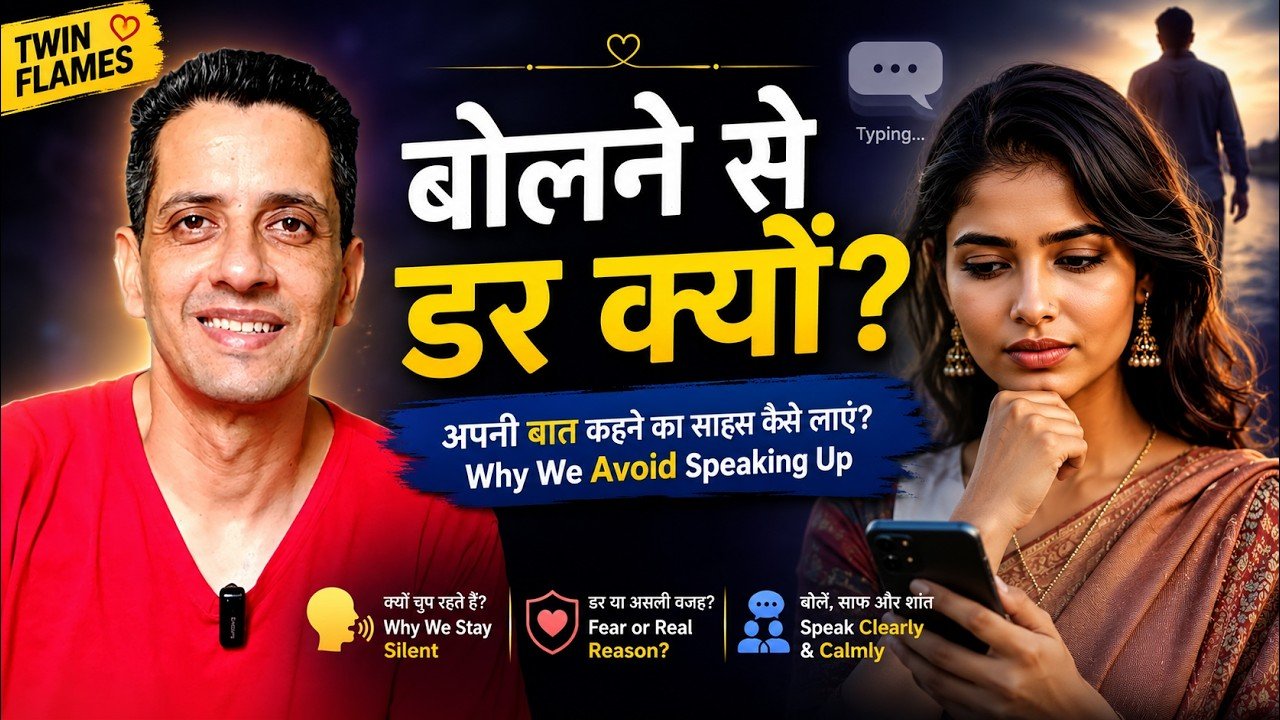
Fear of speaking up for yourself in Twin Flame Connection: Why It Feels So Difficult? Hidden Reasons

Fear of speaking up for yourself

Fear of Speaking Up

Have you ever bought something from a shop, later realized it was defective, and then felt surprisingly stressed about returning it?

The item might be worth only a small amount.

Yet the thought of going back and saying:

  • “This isn’t what I expected.”
  • “I’d like to replace this.”
  • “There seems to be a problem.”

can feel much heavier than the item itself.

For many people, this isn’t really about returning a product.

It reveals something much deeper:

the fear of speaking up for yourself.

Fear of speaking up for yourself in Twin Flame Connection

What Is the Fear of Speaking Up?

The fear of speaking up is often disguised as overthinking.

Instead of expressing what we feel, the mind starts creating endless scenarios:

  • What if they judge me?
  • What if they reject my request?
  • What if they think I’m being unreasonable?
  • What if they get upset?
  • What if I create a conflict?

As these thoughts grow, taking action starts feeling more difficult than the original problem itself.

The result is hesitation, avoidance, and silence.


Why Speaking Up Feels So Uncomfortable

Many people assume that their discomfort comes from the other person.

But often, the deeper issue is internal.

The fear of speaking up is frequently connected to:

  • fear of rejection
  • fear of criticism
  • lack of confidence
  • self-doubt
  • fear of losing approval

When these emotions are active, even simple conversations can feel emotionally overwhelming.


How the Fear of Speaking Up Shows Up in Relationships

This pattern becomes even more noticeable in relationships.

You may notice behaviors such as:

  • avoiding important conversations
  • suppressing your feelings
  • pretending everything is fine
  • continuously adjusting to keep the peace

Deep down, you know something needs to be addressed.

Perhaps:

  • there is a lack of respect
  • communication feels one-sided
  • expectations are unclear
  • important issues remain unresolved

Yet instead of discussing them, many people choose silence.


Why the Fear of Speaking Up Is Stronger in Twin Flame Connections

The fear of speaking up often becomes more intense in a twin flame connection.

Because the emotional bond feels so deep, there is usually more at stake emotionally.

You may hesitate to express yourself because:

  • you fear losing the connection
  • you worry about upsetting the other person
  • you doubt your own feelings
  • you wonder if you are expecting too much

As a result, important conversations are delayed again and again.


The Real Fear Is Not What Most People Think

Many people believe they are afraid of another person’s reaction.

But the deeper fear is often something else.

The real fear is:

What will happen if I stand up for myself?

What if:

  • they say no?
  • they disagree?
  • they ignore my feelings?
  • they do not value what I am saying?
  • the relationship changes?

These possibilities can feel uncomfortable.

So instead of facing them, many people choose silence.


Why Avoiding Conversations Creates Bigger Problems

Avoidance may create temporary comfort.

But it rarely creates long-term peace.

When concerns remain unspoken:

  • frustration grows
  • resentment builds
  • confusion increases
  • emotional distance develops

The issue doesn’t disappear.

It simply stays unresolved beneath the surface.

Over time, this can damage both your well-being and the relationship itself.


Speaking Up Does Not Mean Creating Conflict

One of the biggest misconceptions about communication is the belief that speaking up automatically creates conflict.

In reality, healthy communication creates clarity.

There is nothing wrong with wanting:

  • respect
  • honesty
  • clarity
  • mutual understanding

The only way another person can truly understand your needs is if those needs are communicated.

People cannot respond to concerns they do not know exist.


What Happens When You Express Yourself

When you communicate openly, several things become possible.

You may discover:

  • the other person understands your perspective
  • there was a misunderstanding
  • they have information you were unaware of
  • a solution is easier than you expected

Even if the outcome is not exactly what you wanted, you gain something valuable:

clarity.

And clarity is always better than silent assumptions.


How to Overcome the Fear of Speaking Up

Overcoming the fear of speaking up does not require becoming aggressive or confrontational.

Instead, it involves developing calm confidence.

Focus on Clarity Instead of Fear

Before speaking, shift your attention away from imagined outcomes.

Instead of thinking:

“What if they reject me?”

Ask:

“What is the truth I need to communicate?”

This creates a completely different mindset.


Speak Calmly and Respectfully

Confidence is not about intensity.

Often, the strongest communication is also the calmest.

Express:

  • your thoughts
  • your concerns
  • your expectations

without blame, guilt, or emotional drama.


Accept That You Cannot Control the Outcome

You can control:

  • your honesty
  • your communication
  • your actions

You cannot control:

  • their reaction
  • their choices
  • their perspective

Real confidence develops when you stop trying to control outcomes and focus on expressing yourself clearly.


Why Speaking Up Is an Act of Self-Respect

At its core, the fear of speaking up is often connected to self-worth.

When you believe your needs matter, expressing them becomes easier.

Speaking up does not mean demanding that everything go your way.

It simply means acknowledging that your feelings, experiences, and concerns deserve to be heard.

This is an important part of healthy relationships and personal growth.


Small Situations Often Teach Big Lessons

Life often teaches us through ordinary experiences.

Something as simple as returning a low-cost item can reveal:

  • how comfortable you are with boundaries
  • how you handle rejection
  • how much you value yourself
  • whether you avoid difficult conversations

These small moments quietly prepare you for bigger situations in life and relationships.


Final Reflection

If you struggle with the fear of speaking up, remember that the goal is not to eliminate all discomfort.

The goal is to express yourself despite the discomfort.

Whether it is a conversation about:

  • a relationship
  • a personal boundary
  • a misunderstanding
  • a need that has not been met

your voice matters.

Because real growth begins when you stop avoiding difficult conversations and start communicating with clarity, calmness, and self-respect 🌿


FAQs

What causes the fear of speaking up?

The fear of speaking up is often caused by fear of rejection, criticism, conflict, or losing approval from others.

Why is the fear of speaking up common in relationships?

Many people worry that expressing their true feelings may create conflict or damage the relationship.

How does the fear of speaking up affect twin flame connections?

It can lead to suppressed emotions, lack of clarity, unresolved issues, and growing emotional frustration.

How can I overcome the fear of speaking up?

Focus on communicating clearly and respectfully rather than trying to control the other person’s response.

Is speaking up selfish?

No. Healthy communication is an important part of self-respect and balanced relationships.


Helpful Resources

See also:

How Pets Affect Twin Flame Journey? Emotional Attachment and Spiritual Growth

How Pets Affect Twin Flame Journey

How Pets Affect Twin Flame Journey

Have you ever wondered whether pets can influence your spiritual journey or does Pets Affect Twin Flame Journey?

Many people see pets as:

  • emotional support
  • family members
  • companions
  • sources of comfort

And naturally, deep emotional bonds are formed with them.

But a deeper question also arises:

Can the energy and consciousness of animals affect our awareness, emotions, and spiritual growth? or How Pets Affect Twin Flame Journey?

This topic is not about deciding whether pets are “good” or “bad.”
It is about increasing awareness and understanding.

How pets impact Twin Flame Journey?

Understanding Energy and Consciousness

Every living being carries its own energy and consciousness.

Humans have:

  • self-awareness
  • reflection
  • the ability to consciously grow

Animals, on the other hand, mostly function through:

  • instinct
  • survival patterns
  • natural behavioral conditioning

When two beings live closely together continuously, their energies naturally begin influencing each other.

This influence may appear subtle, but for spiritually sensitive people, even subtle energetic changes can feel significant.


Why Spiritually Sensitive People Feel More Impact

For people deeply involved in spiritual practices or inner work, awareness becomes more refined over time.

As sensitivity increases, even small environmental influences begin affecting:

  • emotional clarity
  • inner peace
  • thought patterns
  • energetic balance

Something that may not affect an average person strongly can feel much more intense for someone on a spiritual journey.

This is especially relevant in a twin flame journey, where emotional and energetic sensitivity is already naturally heightened.


How Animal Energy May Influence Human Behavior

The transcript explains that animals carry their own instinctive tendencies.

For example:

  • survival instinct
  • protectiveness
  • impulsive reactions
  • emotional dependency patterns

When humans stay in close energetic contact continuously, some of these patterns may subtly influence their emotional responses.

The idea shared here is not scientific proof, but a spiritual reflection about energetic influence and awareness.


Emotional Attachment and Spiritual Growth

One of the biggest concerns discussed in the transcript is emotional attachment.

Pets often create:

  • emotional dependency
  • responsibility
  • attachment
  • constant outward attention

Over time, this may begin occupying:

  • emotional energy
  • mental focus
  • daily awareness

The deeper question becomes:
“Is this supporting my spiritual growth… or slowing it down?”


Can Pets Distract You From Your Journey? OR How Pets Affect Twin Flame Journey?

In some situations, people may notice that caring for pets affects:

  • travel freedom
  • participation in spiritual programs
  • meditation consistency
  • emotional stability
  • relationship intimacy

The point is not to reject animals.
The point is to honestly reflect on whether your environment supports your inner growth.


Pets, Emotional Energy, and Dependency

The transcript also highlights how emotional attachment itself creates energetic exchange.

Whenever deep attachment exists, emotional patterns naturally begin affecting each other.

This is not limited to pets alone.
It applies to all emotional attachments.

The more emotionally dependent we become, the more our awareness may shift outward instead of inward.


Compassion Without Attachment

An important clarification shared in the discussion is this:

Spiritual awareness does not mean becoming heartless toward animals.

Compassion is still important.

You can:

  • feed animals
  • help injured animals
  • support medical care
  • show kindness and care

But compassion does not necessarily require intense emotional attachment or keeping animals constantly within your personal living space.


Traditional Wisdom About Animals and Living Spaces

Traditionally, many cultures kept animals nearby but not inside intimate living spaces continuously.

Animals often had:

  • separate sheds
  • outdoor spaces
  • designated areas

Humans interacted lovingly with them while still maintaining energetic separation.

The transcript suggests reflecting on whether modern living arrangements may affect emotional and spiritual balance differently.


The Importance of a Supportive Spiritual Environment

Your spiritual journey is influenced not only by what you practice internally, but also by:

  • your environment
  • relationships
  • responsibilities
  • surrounding energies

Everything around you contributes to your inner state in subtle ways.

This is why awareness about your environment becomes important on deeper spiritual paths.


What If You Already Have Pets?

The discussion clearly explains that this is not about abandoning pets or neglecting responsibility.

If you already have pets:

  • care for them responsibly
  • act compassionately
  • fulfill your responsibilities consciously

But also reflect honestly:

  • Is attachment becoming excessive?
  • Is your awareness becoming overly outward-focused?
  • Is your inner peace being affected?

The invitation is toward awareness and balance, not guilt.


Making Conscious Decisions on the Twin Flame Journey

Before bringing a pet into your life, especially while going deeper into spiritual work, it may help to reflect carefully:

  • Do I truly have the time and energy?
  • Will this support or distract my journey?
  • Am I making this choice consciously or emotionally?

Because every responsibility influences your energy and attention over time.


Final Reflection

The deeper insight shared in this discussion is not about choosing spirituality over love.

It is about choosing clarity within love.

When awareness becomes clearer, life naturally begins aligning toward what truly supports your growth. 🌿

And sometimes, even seemingly small aspects of life—like the environment we create around ourselves—can quietly shape our inner journey.


FAQs

Can pets affect spiritual growth?

According to the perspective shared in this discussion, continuous energetic and emotional interaction with pets may influence awareness and emotional patterns.

Are pets bad for twin flame journeys? OR How Pets Affect Twin Flame Journey?

The discussion does not label pets as bad. It encourages awareness about attachment, energy, and environmental influence.

Should spiritually aware people avoid pets?

Not necessarily. The focus is on balance, awareness, and understanding how responsibilities and attachments affect inner growth.

Can emotional attachment affect spiritual clarity?

Yes, excessive emotional attachment can sometimes shift awareness outward and create emotional dependency.

Is compassion toward animals still important?

Absolutely. Kindness, care, feeding, and helping animals are encouraged. The discussion mainly focuses on attachment and energetic influence.

Helpful Resources

See also:

en_US