Choosing a Spiritual Guru: Teacher vs Guru Explained

Choosing a Spiritual Guru: Teacher vs Guru Explained

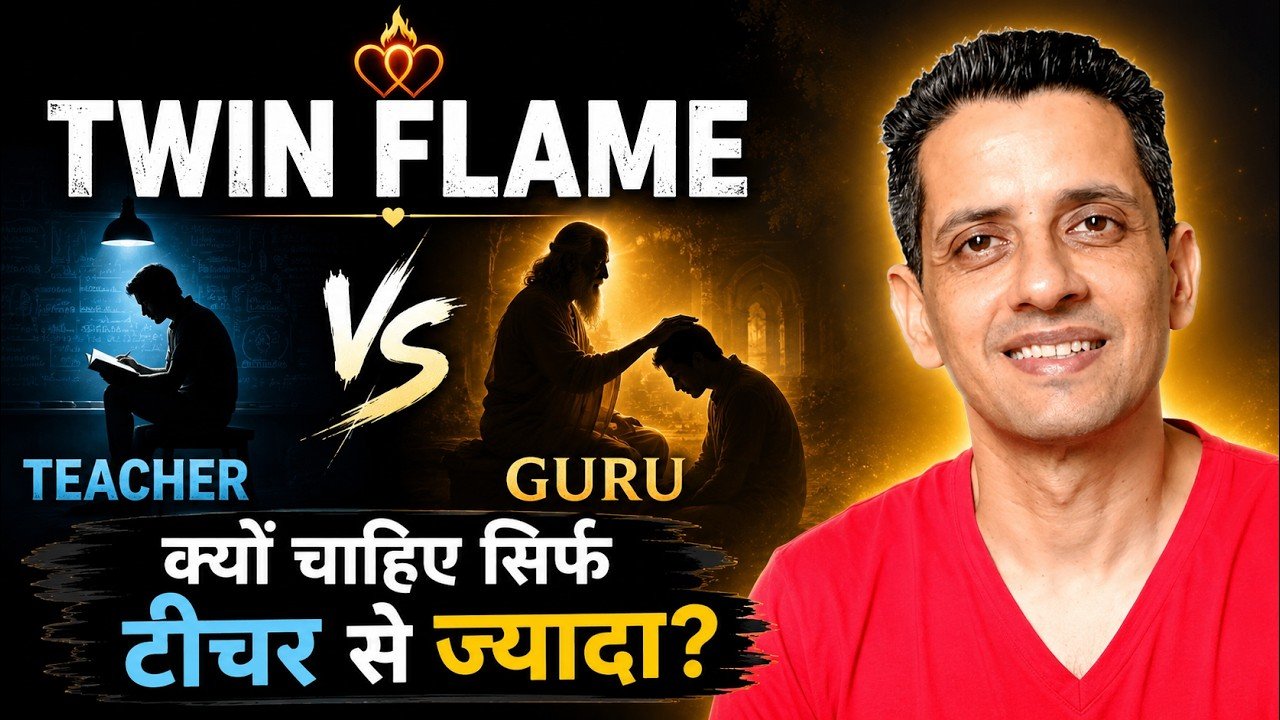
Teacher vs Guru: Choosing a Spiritual Guru for Your Journey

When we begin a spiritual journey, we often look for someone who can teach us meditation, healing techniques, kriyas, or other spiritual practices. We may learn from several teachers before finding a spiritual master whose teachings resonate deeply with us.

But what happens when life presents a problem that meditation alone does not seem to resolve?

What happens when you have spent years practising spiritual techniques, yet a deeply emotional experience leaves you confused, heartbroken, or uncertain about what to do next?

At such times, an important question arises: Do we need someone who can teach us spiritual practices, or someone who can also guide us through the difficulties we are experiencing?

Understanding the difference between a teacher and a guru can help us make a more conscious decision about whom we follow and what kind of support we need on our spiritual journey.

Why Every Twin Flame Needs More Than Just a Teacher

What Is the Difference Between a Teacher and a Guru?

A spiritual teacher and a guru can both play valuable roles in our growth. However, their roles may differ in the kind of guidance they provide.

A teacher may introduce us to specific practices, explain spiritual concepts, and guide us in applying what they have learned from their own teachers.

A guru, in the understanding explored here, represents a deeper relationship: someone to whom we can bring not only questions about spiritual practice but also the personal difficulties we are facing.

The distinction is not simply about how famous someone is, how many followers they have, or how advanced their teachings appear.

It is about the nature of the guidance available to us.

The Role of a Spiritual Teacher

A spiritual teacher helps us learn.

They may teach meditation, explain a particular kriya, introduce us to a spiritual philosophy, or show us how to practise a technique correctly.

A teacher passes on knowledge and methods that they have learned and understood. Their guidance can help us develop discipline, deepen our understanding, and establish a spiritual practice.

This is an important contribution.

However, learning a practice and receiving guidance through a personal crisis are not necessarily the same thing.

We may know how to meditate and still struggle to understand what to do when a deeply painful situation arises in our lives.

The Role of a Spiritual Guru

In this teaching, a guru is compared to a mother—not because a guru must replace our family, but because the relationship represents a space where we can bring our difficulties openly.

We can explain what we are experiencing, acknowledge our confusion, and ask for guidance.

A guru is someone we can approach through an established way of communicating, even if a response cannot always be immediate.

The essential distinction is that spiritual guidance extends beyond teaching techniques. It includes helping us understand our present situation and consider how to move forward.

This is why choosing a spiritual guru involves looking beyond knowledge or reputation and considering whether meaningful personal guidance is available.

Why Spiritual Practices May Not Be Enough During Emotional Pain

Imagine that someone has spent eight, ten, or even eleven years learning and practising spiritual techniques.

They have attended classes, learned from different teachers, and made a sincere effort to grow spiritually.

Then a major event occurs in their life: the person they consider their Twin Flame gets married to someone else.

After years of emotional investment, the news leaves them heartbroken.

They may know several meditation techniques. They may understand spiritual concepts. They may have a regular practice.

Yet they still have a very immediate question:

What do I do with this pain?

This example highlights an important distinction between knowing a spiritual practice and knowing how to navigate a particular emotional experience.

When we are physically uncomfortable, it can be difficult to concentrate on anything else. Emotional pain can similarly occupy our attention and make it difficult to engage fully with our usual practices.

Meditation and spiritual discipline may still have a place, but the person may also need help understanding the situation they are facing.

They may need someone who will listen, help them examine their experience, and guide them towards a practical next step.

The problem is not necessarily that their spiritual practices have failed. Rather, the question they are asking now requires a different kind of support.

Why the Twin Flame Journey Can Require Ongoing Guidance

The Twin Flame Journey can involve intense emotions, uncertainty, changing expectations, and difficult personal experiences.

Someone may spend years working on themselves, practising meditation, and trying to understand their connection. Then an unexpected event may challenge the way they have understood their journey.

They might wonder:

  • How should I understand what has happened?
  • How do I deal with the emotional pain I am experiencing?
  • What should I focus on now?
  • How do I continue my spiritual practice when I feel overwhelmed?
  • What do I need to learn from this situation?

These questions are not always answered by learning another technique.

Sometimes, we need to discuss what is actually happening in our lives and receive guidance that takes our circumstances into account.

This is one reason ongoing guidance can be valuable. A person who has been working with us over time may already understand our practices, previous challenges, and progress.

A new teacher may be knowledgeable, but they may not immediately know what we have been practising or what kind of support would be most useful to us.

Continuity can therefore make guidance more relevant.

Why Knowing Your Progress Matters

Imagine that you have been learning a particular spiritual practice from someone for several years.

That person understands which practices you have learned, what you have been working on, and what you have previously discussed.

Now imagine approaching someone new for a single session.

Even if the new person is experienced, they may need time to understand your background before they can offer guidance suited to your situation.

This does not mean that seeking a second opinion is always wrong. Sometimes another perspective can be helpful.

The point is that guidance is often more meaningful when it takes your individual circumstances into account.

A teacher or guide who knows your progress may be better placed to help you connect a new challenge with the work you have already done.

For this reason, if you are already working closely with a spiritual teacher or guru, it can be useful to discuss your difficulties with them first—provided that the relationship allows for such conversations and the guidance you receive is appropriate to your needs.

Availability: Can You Reach Your Spiritual Guide When You Need Help?

One of the central questions in choosing a spiritual guru is whether there is a practical way to receive guidance when you need it.

This does not mean expecting someone to be available at every hour of the day or demanding an immediate personal response.

Everyone has responsibilities and limitations.

A teacher or guru may have scheduled consultations, a student-support system, designated discussion sessions, or another established way of communicating.

What matters is whether there is a realistic channel through which you can discuss important difficulties and receive a response within reasonable expectations.

Consider an everyday comparison.

Suppose you have a regular doctor who knows your medical history. But whenever you need help, you discover that you have no way to contact them or arrange an appointment.

You may respect the doctor’s knowledge, but the lack of access can become a practical problem.

A similar question can arise in spiritual guidance.

If your journey involves ongoing challenges, what support is available when something significant happens?

Can you discuss the situation with your teacher? Is there an appropriate way to ask for guidance? If the person cannot respond directly, is there another suitable support arrangement?

These are practical questions worth considering before placing all your expectations on a particular spiritual guide.

Does a Famous Spiritual Master Automatically Become Your Guru?

We may be drawn to a spiritual master because of their reputation, teachings, achievements, or the experiences of their followers.

There is nothing inherently wrong with learning from a well-known spiritual teacher.

But admiration and a personal guidance relationship are not necessarily the same thing.

We may deeply respect someone’s wisdom while having little opportunity to discuss our own circumstances with them.

That person may still be an important source of spiritual knowledge, but we should be clear about the kind of relationship that actually exists.

The question is not whether a famous spiritual master is worthy of respect.

The question is whether the form of guidance they offer matches what we need.

If personal support is important to us, we may need to understand how that support is provided. It might come directly from the master, through an authorized disciple, or through an established teaching and support structure.

Rather than assuming that a person will fulfil every role simply because we regard them as a guru, it is wiser to understand the relationship and its practical boundaries.

How to Choose a Spiritual Guru for Your Needs

Choosing a spiritual guru is a personal decision. The following questions can help you examine whether a particular teacher or guidance relationship is suitable for you.

1. What Kind of Guidance Am I Looking For?

Begin by identifying your actual need.

Are you looking to learn meditation or a spiritual technique?

Do you want a deeper understanding of spiritual concepts?

Are you facing a personal challenge that you need help working through?

Different needs may require different forms of support. Being clear about what you are seeking makes it easier to evaluate whether a teacher’s role matches your expectations.

2. Can I Discuss My Real-Life Problems?

A spiritual guide may teach concepts that inspire you, but can you also discuss the situations you are actually experiencing?

For example, if you are struggling with heartbreak, confusion, or a major change in your life, is there an appropriate opportunity to talk about it?

You do not necessarily need unrestricted access. What matters is whether the arrangement offers a meaningful way to raise your concerns.

3. Does the Guidance Take My Circumstances Into Account?

Generic advice may not address the details of your situation.

Consider whether the guidance you receive takes your background, previous practices, current difficulties, and practical circumstances into account.

You should also feel free to ask questions when something is unclear.

4. Are the Expectations and Boundaries Clear?

A healthy guidance relationship should have understandable boundaries.

You should know how to request support, what kind of response to expect, and whether consultations or additional services involve fees.

A spiritual guide’s role should not require you to surrender your ability to think independently or make personal decisions.

Respect, transparency, and clear communication are important.

5. Does This Relationship Help Me Become More Clear and Capable?

Over time, useful guidance should help you understand your experiences and make more conscious decisions.

Rather than creating endless dependence on someone else to interpret every event, it should support your ability to reflect, learn, and respond to life.

You can respect a teacher deeply while continuing to take responsibility for your own choices.

A Guru Is Not Simply Someone We Decide to Call a Guru

Sometimes, we give someone the title of guru because their teachings resonate with us or because we feel a strong connection to them.

But the title alone does not tell us what kind of guidance is available.

It is worth looking at the relationship itself.

Can we communicate our concerns through an appropriate channel?

Can we ask questions when we are confused?

Is there a genuine effort to understand our situation?

Are we receiving guidance that helps us move forward?

These questions are more useful than relying only on titles, reputation, or the number of people who follow someone.

At the same time, not every teacher is expected to provide personal counselling or continuous individual guidance. Some teachers deliberately focus on teaching practices, and that can be a legitimate role.

The important thing is to understand the difference and choose according to your needs.

When Should You Seek Additional Support?

Sometimes, your existing teacher may not offer the kind of personal guidance you need. They may have limited availability, or your current difficulty may fall outside their area of expertise.

In such cases, seeking another suitable source of support can be reasonable.

That might mean consulting another spiritual guide, arranging a dedicated session, or seeking help from a qualified mental health professional when emotional distress is persistent or overwhelming.

You do not need to view this as a betrayal of your existing teacher.

Different people can serve different purposes in your life.

The goal is to find appropriate support for the difficulty you are actually facing, rather than continuing to struggle simply because you believe you must seek help from only one person.

Final Reflection: Are You Following a Teacher or Receiving Personal Guidance?

The difference between a teacher and a guru is not merely a question of status.

A teacher can give us valuable knowledge, methods, and practices. A personal spiritual guide may also help us examine the difficulties that arise while we apply those teachings in everyday life.

Both roles can matter.

But when we face a painful or confusing situation, it is worth asking whether the support available to us matches what we need at that moment.

If you are on a Twin Flame Journey or another spiritual path, consider these questions:

  • Am I learning techniques, receiving personal guidance, or both?
  • Do I have an appropriate way to discuss the challenges I am facing?
  • Does my guide understand the work I have already done?
  • Do I know what kind of support I can realistically expect?
  • Is this relationship helping me develop greater clarity and responsibility?

You do not need to answer these questions in a hurry. Simply reflecting on them may help you understand your current relationship with your teacher or guru more clearly.

Ultimately, the purpose of spiritual guidance is not just to accumulate practices or knowledge. It is also to help us navigate the realities of our lives with greater understanding.

The most important question is not simply whom we call our guru, but whether the guidance we receive is appropriate for the journey we are actually living.


Helpful Resources

See also:

Why Letting Go of Past Relationships Matters on the Twin Flame Journey

Letting Go of Past Relationships

Letting Go of Past Relationships on the Twin Flame Journey

Have you ever tried to move forward into a new relationship while still emotionally connected to someone from your past?

You may be talking to someone new. You may even believe that you have moved on.

But at the same time, you may still occasionally message your ex, check in on their emotional wellbeing, offer them support, revisit old memories, or maintain a connection that feels more emotional than practical.

At first, this can seem harmless.

You might think:

“We’re just talking.”

“There’s nothing romantic between us anymore.”

“We’re simply staying in touch.”

But sometimes, even when nothing obviously romantic is happening, an old emotional connection can continue occupying space within us.

And when we are trying to build something new, that can create confusion, emotional disturbance, and divided attention.

This is why letting go of past relationships can become an important part of emotional healing and moving forward.

Why You Must Release the Past on Twin Flame Journey to Move Forward

Why Is Letting Go of Past Relationships So Difficult?

A past relationship isn’t simply another person we once knew.

A significant relationship can contain years of memories, emotional experiences, habits, expectations, communication patterns, and attachment.

Even after the relationship ends, some of these patterns can remain active within us.

We may no longer want the relationship back, but we may still:

  • Think about the person regularly.
  • Feel responsible for their emotions.
  • Seek their emotional support.
  • Offer them emotional support.
  • Revisit memories together.
  • Compare new relationships with the old one.
  • Feel emotionally affected by their behavior.
  • Maintain contact because the connection feels familiar.

This is why moving on isn’t always as simple as deciding that a relationship is over.

The relationship may have ended externally while parts of the emotional connection are still active internally.

A New Relationship Can Be Affected by an Old Emotional Connection

Imagine entering a new relationship while continuing to maintain a strong emotional connection with an ex.

You may genuinely care about your new partner.

You may genuinely want the new relationship to grow.

But your emotional attention is now divided.

Part of your attention is moving toward the present.

Another part continues moving toward the past.

This can create a subtle feeling that something isn’t completely settled.

You may experience confusion.

You may compare the two relationships.

You may respond to your current partner using emotional patterns that were developed with your ex.

And the new relationship may not get the opportunity to develop naturally on its own terms.

Think of Your Emotional Energy Like Computer Resources

One way to understand this is through a simple computer analogy.

Imagine a computer running two powerful operating systems at the same time.

Both systems require resources.

Both use memory.

Both need processing power.

If one begins consuming more resources, the performance of the other can suffer.

Similarly, when two romantic emotional connections remain highly active, your attention and emotional resources can become divided.

The past relationship has its own memories and patterns.

The present relationship has its own needs and possibilities.

Trying to keep both emotionally active can make it difficult for either one to receive your complete attention.

The original teaching uses this idea to illustrate how maintaining two strong emotional directions can create internal strain.

The Two-Boats Problem

There is another way to picture it.

Imagine standing with one foot in each of two boats.

One boat is moving in one direction.

The other is moving somewhere else.

The further apart those directions become, the harder it is to maintain balance.

A similar thing can happen emotionally.

Your past has a direction.

Your present has another.

If your emotional energy continues moving strongly in both directions, you can begin experiencing an internal tug-of-war.

You may want to move forward, while something inside you continues pulling you backward.

Old Relationships Can Leave Emotional Patterns Behind

Every significant relationship teaches us ways of relating.

Perhaps you learned to communicate in a certain way.

Perhaps you became accustomed to explaining yourself repeatedly.

Perhaps you learned to manage another person’s emotions.

Perhaps you developed defensive behaviors.

Perhaps certain situations automatically triggered particular reactions.

These patterns can become deeply familiar.

When you enter a new relationship, the new person may be completely different.

The communication style may be different.

The emotional needs may be different.

The way conflicts are handled may be different.

But if the old emotional system is still active, we may unconsciously carry some of those patterns into the new relationship.

This is one reason emotional closure matters.

It gives us the opportunity to recognize what belonged to the past instead of automatically carrying it into the present.

Contact With an Ex Can Reactivate Old Attachment

Sometimes a small interaction can bring back much more than we expect.

You might send a simple message.

You might ask how your ex is doing.

They might offer you emotional support.

You might talk about something that happened years ago.

And suddenly, memories become emotionally alive again.

The conversation may have been short.

But the emotional effect can last much longer.

This doesn’t mean every conversation with an ex is automatically harmful.

There can be legitimate reasons for maintaining contact, including practical responsibilities.

The important question is:

What kind of connection are we maintaining?

Practical Connection vs. Emotional Connection

This distinction is especially important.

Two people may need to communicate because they share responsibilities, children, property, work, or other practical matters.

That is different from remaining emotionally dependent on one another.

Practical communication can be necessary.

Emotional attachment is something else.

Ask yourself:

Am I communicating because something genuinely needs to be handled, or am I still using this person as an emotional source of comfort, reassurance, or support?

That question can reveal a lot about whether the past relationship is actually finished emotionally.

What Happens When Emotional Attachment Remains?

When emotional attachment to the past remains active, several things can happen.

Your Attention Becomes Divided

Instead of being fully present in your current relationship, some of your attention continues returning to the past.

Comparison Begins

You may compare the new person with your former partner.

You may compare how they communicate, how they respond, how they express affection, or how intense the connection feels.

Emotional Clarity Decreases

You may find it harder to understand what you genuinely want because your emotional experience is being influenced by two different relationship histories.

The Present Relationship Can Feel Unstable

Even if nothing obviously wrong is happening, there can be a subtle feeling that something isn’t completely settled.

The source describes this as an emotional division that can weaken clarity and interfere with the development of the present connection.

Letting Go Doesn’t Mean Erasing the Past

This is one of the most important points.

Letting go of past relationships does not mean pretending they never happened.

It doesn’t mean that the person was bad.

It doesn’t mean that the relationship had no value.

It doesn’t mean that every memory needs to disappear.

And it doesn’t mean that we have to reject the person with anger.

A past relationship can remain part of our history without continuing to occupy an active emotional role in our present.

We can appreciate what we learned.

We can acknowledge what happened.

We can respect the experience.

And still choose to move forward.

Emotional Closure Is About Creating Space

Sometimes we think emotional closure means finding one final conversation that explains everything.

But closure can also mean something much simpler:

We stop investing emotional energy in what is no longer the direction of our life.

This may involve reducing unnecessary emotional conversations.

It may involve no longer seeking comfort from the former partner.

It may involve allowing memories to remain memories instead of repeatedly recreating the old connection.

And it may involve recognizing that we are emotionally ready—or not yet ready—to move forward.

Ask Yourself Where Your Energy Is Going

One of the strongest ideas in this teaching is that attention and emotional energy are connected.

Where are you repeatedly placing your attention?

Are you checking on your ex?

Are you wondering what they are doing?

Are you revisiting old conversations?

Are you emotionally supporting them?

Are you hoping they will eventually change?

Are you comparing your current partner with them?

These questions aren’t meant to create guilt.

They are meant to create awareness.

Because before we can change an emotional pattern, we first need to see that it is still operating.

The Twin Flame Journey Can Make This More Noticeable

When the present relationship is experienced as a Twin Flame connection, the emotional intensity may make these dynamics feel even more obvious.

A deeply significant connection can bring greater emotional sensitivity.

So if an old romantic connection is still active at the same time, even a relatively small interaction with the past may create noticeable emotional disturbance.

You may feel:

“I’m trying to move forward, but something keeps pulling me back.”

That feeling can be an invitation to look at where your emotional attention is still invested.

Rather than immediately asking what your Twin Flame is doing, you can ask:

“What is my own emotional system still holding on to?”

You Cannot Fully Move Forward While Constantly Looking Back

Moving forward is not simply about finding someone new.

It is also about becoming emotionally available for what you have chosen.

If you want to build a new relationship while remaining deeply emotionally invested in a previous one, your attention is naturally divided.

This doesn’t mean that the past must be erased.

It means that if the present is your conscious direction, your emotional investment needs to increasingly support that direction.

The source expresses this as a choice about where our attention and energy are directed.

Sometimes Growth Means Releasing, Not Finding

We often imagine growth as acquiring something new.

A new relationship.

A new opportunity.

A new spiritual experience.

A new beginning.

But sometimes the next stage of growth doesn’t require finding anything.

It requires releasing something.

We may already know where we want to go.

What keeps us from moving there may be the emotional weight we continue carrying from where we have been.

That is why letting go of the past can itself become an important form of growth.

How to Begin Letting Go of a Past Relationship

Letting go does not have to happen through force.

Instead, begin with awareness.

Notice What Still Pulls You Back

Pay attention to the moments when you think about your former partner.

What triggered the thought?

What emotion followed it?

Did you feel loneliness, guilt, longing, responsibility, comfort, or curiosity?

Notice the Role the Person Still Plays

Ask yourself:

“What role does this person still have in my emotional life?”

Are they still the person you call when you’re upset?

Do you still seek their approval?

Do you still feel responsible for their wellbeing?

Do you still need their attention?

These questions can help reveal whether the emotional relationship has actually ended.

Separate Memory From Attachment

You can remember someone without remaining attached to them.

A memory can simply be a memory.

It doesn’t have to become an invitation to reopen the relationship.

Decide Where You Want Your Life to Go

Eventually, we have to become honest about direction.

If you genuinely want to build your present relationship, then ask whether your current emotional behavior supports that choice.

If you’re not ready to release the past, that is also something worth acknowledging.

Honesty is more useful than pretending to have moved on.

Releasing the Past Is Not About Forcing a New Relationship

There is another important distinction.

Letting go of an ex doesn’t guarantee that a new relationship will immediately appear.

The purpose of emotional closure is not to manipulate the universe into sending someone new.

It is to become internally clearer.

When the past no longer occupies so much emotional space, you may be more available to experience whatever comes next.

That might be a new relationship.

It might be deeper self-connection.

It might be a period of being alone.

The point is not to replace one person with another.

The point is to become free enough to choose consciously.

What Does Moving On Actually Mean?

Moving on does not necessarily mean:

“I never think about that person again.”

It can mean:

“Thinking about that person no longer controls my present.”

It means memories can arise without automatically creating emotional involvement.

It means the past can exist without constantly pulling your attention toward it.

It means you can acknowledge what happened while continuing to live where you are now.

That is a much deeper form of moving on.

The Real Question Is: Which Direction Do You Choose?

Ultimately, this isn’t only about an ex.

It is about direction.

Your life is moving forward.

The question is whether your emotional attention is moving with it.

If you want your present relationship to develop, can you create enough emotional space for it?

If you aren’t ready, can you honestly acknowledge that?

If you still have unfinished emotional business with the past, can you face it rather than hiding it behind a new relationship?

These questions may be more valuable than trying to predict what will happen next.

Final Reflection

The past can be meaningful without remaining active.

A former relationship can have shaped you without continuing to define you.

You can remember someone without remaining emotionally attached to them.

You can respect what happened without continuing to live inside it.

And you can move forward without needing to make the past wrong.

Perhaps that is what letting go of past relationships really means.

It is not about deleting memories.

It is not about rejecting people.

It is not about pretending that nothing mattered.

It is about becoming conscious of where your attention and emotional energy are going—and deciding whether that direction still belongs to the life you want to create.

If your life is moving forward, but your emotional energy is still flowing backward, there may be something that needs to be released.

Not because the past was meaningless.

But because the present deserves enough space to become fully present.

And sometimes, the most important step toward a new chapter is not finding someone new.

It is finally becoming free enough to leave the previous chapter where it belongs: behind you.


Helpful Resources

See also:

Understanding the Twin Flame Journey | A Love Story or a Spiritual Comedy?

Understanding the Twin Flame Journey

Understanding the Twin Flame Journey

We often imagine the Twin Flame Journey as though it were a romantic movie.

There is beautiful music playing in the background. The hero makes a dramatic entrance. Families become emotional. Two people finally find each other, fall deeply in love, and perhaps even sing a romantic song together somewhere in Switzerland.

It sounds beautiful.

But what happens when real life begins?

Instead of romantic music, we may find ourselves checking someone’s online status, wondering why they have not replied, analyzing their social media posts, watching relationship readings at 2 a.m., and trying to understand what they might be thinking.

Suddenly, the beautiful love story starts feeling less like a romantic movie and more like a rather unexpected combination of drama, reality television, and detective investigation.

And perhaps that is exactly what makes the Twin Flame Journey so interesting.

A Love Story or a Spiritual Comedy? | Twin Flame Journey

The Twin Flame Journey May Not Look Like the Love Story We Imagined

A Twin Flame connection is often described as an unusually intense and deep connection.

When we meet someone with whom we experience this kind of intensity, it can feel as though there is something fundamentally different about the relationship.

We may expect:

  • Romantic conversations
  • Emotional closeness
  • A peaceful connection
  • Divine or spiritual love
  • Strong energetic compatibility
  • A feeling that everything has finally fallen into place

In other words, we may expect the movie version of love.

But sometimes the actual experience looks very different.

Instead of simply enjoying the connection, we may start monitoring it.

When was the last time they were online?

Why haven’t they replied?

What did that status update mean?

Was that message meant for me?

Did something change between us?

And before we know it, we are spending more energy analyzing the connection than actually experiencing our own lives.

The mind may say, “This is spiritual growth.”

Meanwhile, the body may be saying, “This is stress.”

Why Can a Twin Flame Connection Feel So Intense?

One way of understanding the intensity is through the idea of the Twin Flame acting as a mirror.

But this isn’t necessarily the kind of mirror that simply tells us how beautiful or special we are.

It can become a mirror for the parts of ourselves we may not have fully seen before.

The Mirror Can Reveal Our Insecurities

A deeply intense connection can bring our insecurities to the surface.

We may suddenly become aware of fears we didn’t realize were still influencing us.

Fear of rejection.

Fear of abandonment.

Fear of losing someone.

Fear that we are not enough.

Fear that the relationship may disappear.

These emotions can become much more visible when a relationship matters deeply to us.

The Mirror Can Reveal Attachment

We may also discover how strongly we are attached to a particular outcome.

We want the relationship to develop in a certain way.

We want communication to happen at a certain pace.

We want reassurance.

We want certainty.

And when reality doesn’t match our expectations, emotional reactions can become stronger.

The Mirror Can Reveal Overthinking

Perhaps one of the most recognizable experiences is overthinking.

A simple message can become an investigation.

A delay in replying can generate multiple explanations.

A social media post can become a puzzle.

We can spend hours trying to understand what another person is thinking instead of asking ourselves what is happening within us.

It can almost feel as though we joined a relationship—and unexpectedly got enrolled in an emotional gym.

The universe, metaphorically speaking, seems to say:

“You came for the relationship. But let’s work on your emotions first.”

Welcome to the Twin Flame Olympics

After the initial excitement of the connection, some people experience what is commonly described as a runner-chaser dynamic.

One person may withdraw, become distant, disappear emotionally, or take longer to respond.

The other person may begin seeking answers.

What happened?

Is everything okay?

Did I do something wrong?

Do you still want this connection?

Are you going to stay?

Should I leave?

And the cycle can become emotionally exhausting.

Then another interesting thing can happen.

We start looking for answers everywhere.

Astrology videos.

Tarot readings.

Relationship predictions.

Videos explaining what the other person supposedly thinks.

Videos predicting when the person will return.

Videos telling us whether union is going to happen.

And because online platforms learn from what we repeatedly watch, our feeds can gradually become filled with even more of the same content.

We may begin with one innocent search and eventually find ourselves surrounded by hundreds of explanations about our Twin Flame.

The search for certainty can become another source of emotional stimulation.

Is Union Really the Goal?

This is where the journey can take an important turn.

Many people initially assume that the ultimate purpose of a Twin Flame Journey is union or reunion with the other person.

But perhaps the deeper lesson can sometimes be found somewhere else.

Perhaps the journey is teaching us how to develop a stronger relationship with ourselves.

Learning Self-Respect

Can we respect ourselves even when another person is uncertain?

Can we remain connected to our own worth without needing constant reassurance?

Can we recognize that someone’s behavior does not determine our value?

These questions can become more important than trying to predict what the other person will do next.

Learning Boundaries

A powerful part of emotional growth can be learning how to maintain healthy boundaries.

Love does not require us to abandon ourselves.

Connection does not require us to tolerate everything.

Spirituality does not mean ignoring our emotional needs.

We can care deeply about someone while still recognizing our own limits.

Becoming Emotionally Stronger

The journey may also invite us to become more capable of handling our emotions.

Instead of immediately reacting to fear, we can learn to observe it.

Instead of chasing reassurance, we can learn to create inner stability.

Instead of losing ourselves in another person’s behavior, we can return our attention to our own life.

This can be a very different definition of spiritual growth.

Maybe the Universe Didn’t Send a Romantic Partner—Maybe It Sent a Personality Development Course

There is a humorous way to look at the entire experience.

Perhaps we thought we were signing up for a beautiful romantic relationship.

Instead, the universe handed us a complete personality-development course.

And the starter pack might include:

  • Emotional triggers
  • Confusion
  • Healing
  • Overthinking
  • Random signs
  • Spiritual growth
  • Emotional lessons
  • Attachment
  • Unexpected songs that suddenly become meaningful

The funny part is that we may begin the journey thinking:

“I want to heal my Twin Flame.”

And after some time, we may arrive at a completely different realization:

“Wait. Maybe I need to work on myself first.”

That shift can be significant.

Because when our attention moves from “How do I get this person?” to “What is this experience teaching me?”, the entire journey can begin to look different.

From Obsession to Awareness

There is a difference between experiencing an intense connection and becoming consumed by it.

If the journey turns into constant checking, chasing, analyzing, predicting, and waiting, we may want to pause and look at what is actually happening within us.

Instead of asking only:

“When will my Twin Flame return?”

we can also ask:

“What is this experience showing me about myself?”

Instead of:

“What is my Twin Flame thinking?”

we can ask:

“What am I feeling right now?”

Instead of:

“How can I make this relationship happen?”

we can ask:

“How can I remain connected to myself while experiencing this relationship?”

These questions bring our attention back to where we actually have influence: ourselves.

The Real Sign of Growth May Be Who We Are Becoming

The most meaningful indication of growth may not always be whether the relationship has reached a particular external outcome.

It may be visible in the way we respond to life.

Are we becoming more emotionally mature?

Are we becoming more spiritually aware?

Can we handle difficult emotions with greater awareness?

Can we maintain our self-respect?

Can we establish boundaries?

Can we experience uncertainty without completely losing ourselves?

If the answer to these questions is gradually becoming yes, then something meaningful may already be changing.

Growth does not necessarily need to wait for a particular relationship outcome.

Maybe the Twin Flame Journey Is a Spiritual Comedy

Perhaps the final realization is that the Twin Flame Journey isn’t always a romantic love story.

Sometimes it can feel like one of the universe’s most dramatic—and strangely funny—self-growth programs.

We may enter expecting romance.

We may receive emotional lessons.

We may expect certainty.

We may receive questions.

We may expect someone else to complete our story.

And instead, we may be invited to discover ourselves more deeply.

That doesn’t make the journey meaningless.

In fact, it can make the journey much more interesting.

If Your Twin Flame Journey Feels More Like Drama Than Romance

If your experience feels less like a beautiful romantic movie and more like an emotional roller coaster, you are not necessarily doing something wrong.

Many people experience confusion, emotional intensity, uncertainty, and unexpected lessons in deeply significant relationships.

So perhaps we can take a breath and allow ourselves to see the lighter side of it.

Maybe the journey isn’t supposed to look perfect.

Maybe it is supposed to teach us something.

And perhaps one of the most valuable questions we can ask is not:

“When will we finally reach union?”

but:

“Who am I becoming through this journey?”

That question can shift the entire experience from chasing an outcome to discovering ourselves.

Frequently Asked Questions About the Twin Flame Journey

What is the Twin Flame Journey?

The Twin Flame Journey is commonly understood as an intense spiritual or relational experience that can bring deep emotions and personal lessons to the surface. In this perspective, the connection may function as a mirror, revealing insecurities, attachments, fears, and patterns that invite inner growth.

Is the goal of the Twin Flame Journey always union?

Not necessarily. While many people focus on union or reunion, the deeper lesson may involve self-respect, boundaries, emotional maturity, self-awareness, and learning not to abandon ourselves within an intense connection.

Why does a Twin Flame connection feel so intense?

The intensity may be connected to how strongly the relationship brings emotional patterns to our awareness. Feelings such as attachment, insecurity, fear of abandonment, and overthinking can become much more noticeable when a relationship feels deeply significant.

Why do people become obsessed with Twin Flame readings and predictions?

Uncertainty can create a strong desire for reassurance. Astrology, tarot, and online content can temporarily provide a sense of certainty, but repeatedly searching for answers about another person’s thoughts or future behavior can also keep our attention focused outside ourselves.

What can the Twin Flame Journey teach us?

It can become an opportunity to develop self-respect, emotional strength, healthy boundaries, greater awareness, and a stronger connection with ourselves. The specific lessons can vary from person to person.

How do I know whether I am growing through my Twin Flame Journey?

One possible indication is a change in how you respond. You may notice greater emotional maturity, more awareness of your triggers, stronger boundaries, less compulsive chasing, and a greater ability to remain connected to yourself even when the relationship feels uncertain.

Final Reflection

Maybe the Twin Flame Journey is not a movie where everything eventually falls perfectly into place.

Maybe it is something much more human—and sometimes much more humorous.

A journey where love can open the door, but self-awareness asks us to walk through it.

A journey where another person may trigger us, but the deeper work brings us back to ourselves.

And perhaps the most beautiful part is realizing that we don’t have to wait for someone else to arrive, return, reply, or choose us before we begin choosing ourselves.

Because sometimes the greatest transformation in the Twin Flame Journey isn’t finding the other person.

It is discovering who we are becoming along the way.


Helpful Resources

See also:

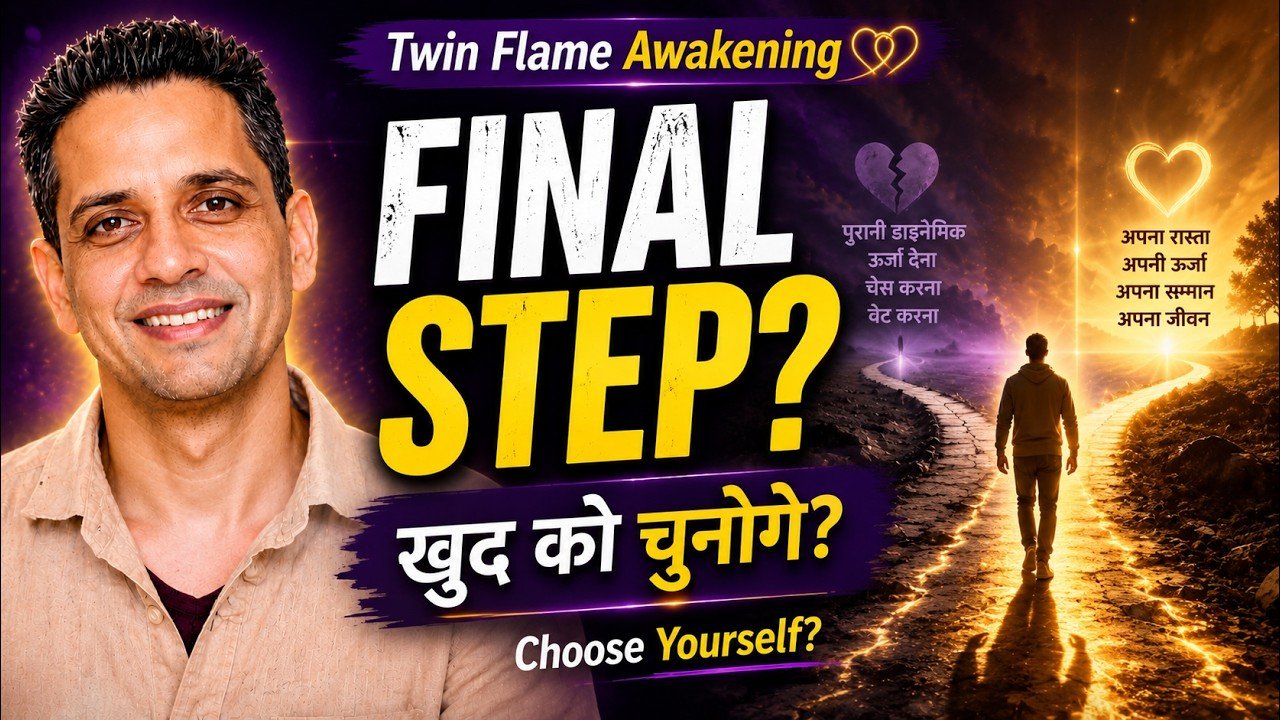
The Final Step in Twin Flame Awakening: Are you Prepared To Take It?

Final Step in Twin Flame Awakening

The Final Step in Twin Flame Awakening

In many deep relationships, there comes a point when one person feels they have been giving much more than the other.

You give your time.

You give your emotional energy.

You listen, understand, explain, support, wait, and remain patient.

Sometimes you even create distance, hoping that the other person will finally realize what the relationship means to them.

Yet nothing seems to change.

The other person continues returning whenever they need comfort, attention, emotional support, or physical closeness—but their own growth and responsibility remain limited.

At some point, an important question arises:

Is there a final step that can change this dynamic?

And even more importantly:

Are you ready to take that step?

For many people, this becomes one of the most challenging stages of Twin Flame Awakening. It is not necessarily about making the other person awaken. It is about becoming willing to return completely to yourself.

The Final Step In Twin Flame Awakening | Can you Take It?

What Happens When You Give Too Much in a Deep Connection?

A deep connection can naturally make you want to give more.

You may find yourself offering:

  • emotional understanding
  • patience
  • attention
  • time
  • affection
  • explanations
  • support
  • physical closeness

You may genuinely believe that the more love and understanding you provide, the more the other person will eventually change.

You may think:

“If I show them enough love, perhaps they will understand.”

“If I support them enough, perhaps they will grow.”

“If I remain patient, perhaps they will finally recognize the relationship.”

But there is an important distinction between supporting someone’s growth and taking responsibility for their growth.

You can support another person.

You cannot grow for them.

Why Giving More Does Not Necessarily Create Change

When one person continuously provides emotional energy, the other person may continue receiving that support without being required to change.

They know that:

  • you are available
  • you will listen
  • you will understand
  • you will provide comfort
  • you will be there when they need you

Over time, this can become a comfort zone.

The person may not necessarily be intentionally taking advantage of you. They may simply have no internal pressure to change because the emotional support they need is already available.

This is an important part of Twin Flame Awakening: recognizing where your responsibility ends and another person’s responsibility begins.

When You Become Someone’s Emotional Comfort Zone

Imagine someone knows that whenever they are struggling, they can return to you.

They can talk about their problems.

They can receive emotional support.

They can experience physical comfort.

They can receive your attention and understanding.

But after receiving all of this, they continue living exactly as before.

Nothing fundamentally changes.

This creates a subtle pattern:

You continue giving, while they continue receiving.

And because the relationship remains available to them, they may never experience the need to seriously examine their own choices.

This does not necessarily make them a bad person.

It simply means the existing dynamic may be supporting their lack of growth.

The Trap of Waiting for Their Awakening

One of the most difficult parts of a Twin Flame journey can be waiting for the other person to realize something.

You may spend months or years thinking:

“One day they will understand.”

“One day they will recognize the connection.”

“One day they will take responsibility.”

“One day they will awaken.”

But this waiting can quietly become another form of emotional attachment.

Your attention remains focused on their transformation instead of your own.

And that is where the deeper lesson of Twin Flame Awakening begins.

The Final Step Is Not to Convince Them

If someone is not changing, you may naturally try harder.

You explain more.

You love more.

You become more patient.

You try to convince them.

You may even repeatedly explain why the relationship matters.

But genuine growth cannot be forced through explanation.

You do not need to convince someone to take responsibility for their own life.

You also do not need to repeatedly explain why they should value you.

At a certain point, there is another possibility:

Stop trying to make the other person change and change your own participation in the dynamic.

The Final Step: Withdraw Your Energy

The final step is not punishment.

It is not revenge.

It is not an attempt to manipulate the other person into chasing you.

It is not a technique for forcing their awakening.

It is simply a conscious withdrawal of the energy you have been continuously giving away.

This may mean:

  • no more unnecessary explanations
  • no emotional chasing
  • no constant availability
  • no repeatedly trying to fix the connection
  • no offering emotional comfort whenever they return for convenience

You are not doing this from anger.

You are doing it from self-respect and clarity.

This shift can become a powerful turning point in Twin Flame Awakening.

Why Energy Withdrawal Is Not a Manipulation Technique

It is important to understand the intention behind this step.

You are not withdrawing because you want to create a reaction.

You are not thinking:

“If I disappear, they will miss me and finally awaken.”

That is still focusing your energy on them.

The deeper shift is:

“I am returning my energy to myself because I no longer want to participate in a dynamic that is not balanced.”

That is completely different.

The first approach is manipulation.

The second is self-respect.

What Can Happen After You Step Back?

Once you stop providing the same level of emotional availability, the existing dynamic may change.

There are different possibilities.

The other person may begin noticing your absence.

They may recognize how much emotional support they were receiving from you.

They may begin reflecting on the relationship.

They may question their own behavior.

They may start taking greater responsibility.

But there is another possibility.

They may simply continue on their existing path.

And that possibility is equally important.

The Truth Becomes Clear When You Stop Over-Giving

When you are constantly available, it can be difficult to know what someone genuinely wants.

Are they interested in you?

Or are they primarily interested in what they receive from you?

Perhaps they value:

  • your attention
  • your emotional support
  • your understanding
  • your availability
  • your comfort
  • your energy

When you stop providing all of these automatically, the relationship has an opportunity to reveal its actual nature.

This is one of the deeper lessons of Twin Flame Awakening.

Sometimes clarity comes not from asking more questions, but from changing your own participation.

You Cannot Control Another Person’s Awakening

This point is essential.

You cannot force another person to awaken.

You cannot control their spiritual growth.

You cannot create their realization through emotional pressure.

You cannot make them become ready simply because you are ready.

Their journey belongs to them.

Your journey belongs to you.

This is why the deeper question is not:

“Will my Twin Flame awaken if I withdraw?”

The more important question is:

“Am I ready to stop abandoning myself while waiting for them to awaken?”

What Happens When You Return to Yourself?

When you stop continuously sending your energy outward, something begins to shift within you.

Your attention returns to:

  • your own life
  • your own growth
  • your own emotional balance
  • your own peace
  • your own responsibilities

Instead of constantly asking what the other person is doing, you begin asking what is happening within you.

This is a significant movement toward Twin Flame Awakening.

You are no longer waiting for another person’s transformation to determine your emotional state.

The Two Possible Outcomes

When you genuinely step back, two broad possibilities may emerge.

The other person may recognize your absence and begin reflecting.

They may start questioning what they truly want and whether they are willing to contribute to the relationship.

Or they may continue living exactly as they were before.

If that happens, painful as it may feel, you have still gained something extremely valuable:

clarity.

You now have a clearer understanding of whether the relationship was based on mutual growth or primarily on what one person was receiving from the other.

The Final Step in Twin Flame Awakening Is About You

This is perhaps the most important realization.

The final step is not necessarily about getting your Twin Flame to awaken.

It is about your willingness to stop losing yourself in the process of waiting for someone else.

You return to yourself.

You reclaim your energy.

You choose your own emotional well-being.

You stop measuring your progress by another person’s behavior.

This is where Twin Flame Awakening becomes an inner journey rather than a mission to change another person.

Choosing Peace and Self-Respect

Sometimes a person reaches a point where they have to choose between continuing to chase a relationship and protecting their inner peace.

If you ever find yourself in such a situation, ask:

“What am I sacrificing to keep this connection alive?”

If the answer includes your:

  • peace
  • self-respect
  • emotional stability
  • dignity
  • personal growth

then it may be time to reconsider how you are participating in the relationship.

Love does not require you to continuously abandon yourself.

What Real Spiritual Growth Looks Like

Real spiritual growth does not mean giving more and more of yourself so another person can eventually change.

It means becoming more conscious of where your energy goes.

It means learning to recognize:

  • when you are over-giving
  • when you are emotionally chasing
  • when you are waiting for someone else’s validation
  • when you are trying to control another person’s journey

And then gently returning to yourself.

That is a profound part of Twin Flame Awakening.

Final Reflection

Sometimes the final step in a deep connection is not another conversation.

It is not another explanation.

It is not another attempt to convince the other person.

Sometimes the final step is simply this:

You choose yourself.

You stop giving your energy where it is continuously being taken without mutual growth.

You stop waiting for someone else to become ready.

You return to your own peace.

And from that space, the relationship may evolve into something deeper—or it may naturally fade from your life.

Either way, something important has happened.

You have returned to yourself.

Perhaps that is the real meaning of Twin Flame Awakening: not awakening someone else, but becoming conscious enough to stop losing yourself while waiting for them to awaken. 🌿

FAQs

What is Twin Flame Awakening?

Twin Flame Awakening can be understood as a deeper process of becoming conscious of your own emotional patterns, attachments, choices, and spiritual growth within an intense connection.

What is the final step in Twin Flame Awakening?

One important final step is learning to return your energy to yourself instead of continuously trying to change, convince, or awaken another person.

Should I withdraw my energy from my Twin Flame?

If a relationship has become one-sided and you are repeatedly over-giving, creating healthy distance and reducing your emotional availability may help you regain clarity and self-respect. The intention should be your own well-being, not manipulating the other person.

Can withdrawing energy make a Twin Flame awaken?

There is no guarantee that another person will change or awaken because you step back. The purpose of withdrawing your energy is not to control their awakening but to stop overextending yourself.

How do I know if I am giving too much in a Twin Flame connection?

You may be over-giving if you are consistently providing emotional support, time, attention, explanations, or availability while receiving little responsibility, effort, or growth in return.

Is choosing yourself selfish in a Twin Flame relationship?

No. Choosing your own emotional stability, self-respect, and peace does not mean you stop caring about another person. It means you recognize that their growth is their responsibility and your well-being is yours.

What happens after I stop chasing my Twin Flame?

The relationship may become clearer. The other person may reflect and take greater responsibility, or they may continue on their own path. Either outcome can give you valuable clarity about the nature of the connection.


Helpful Resources

See also:

en_US